



Words & pics Robert Crack
In the second and final part of this series we continue to follow the meandering Darling River through history, culture and country.

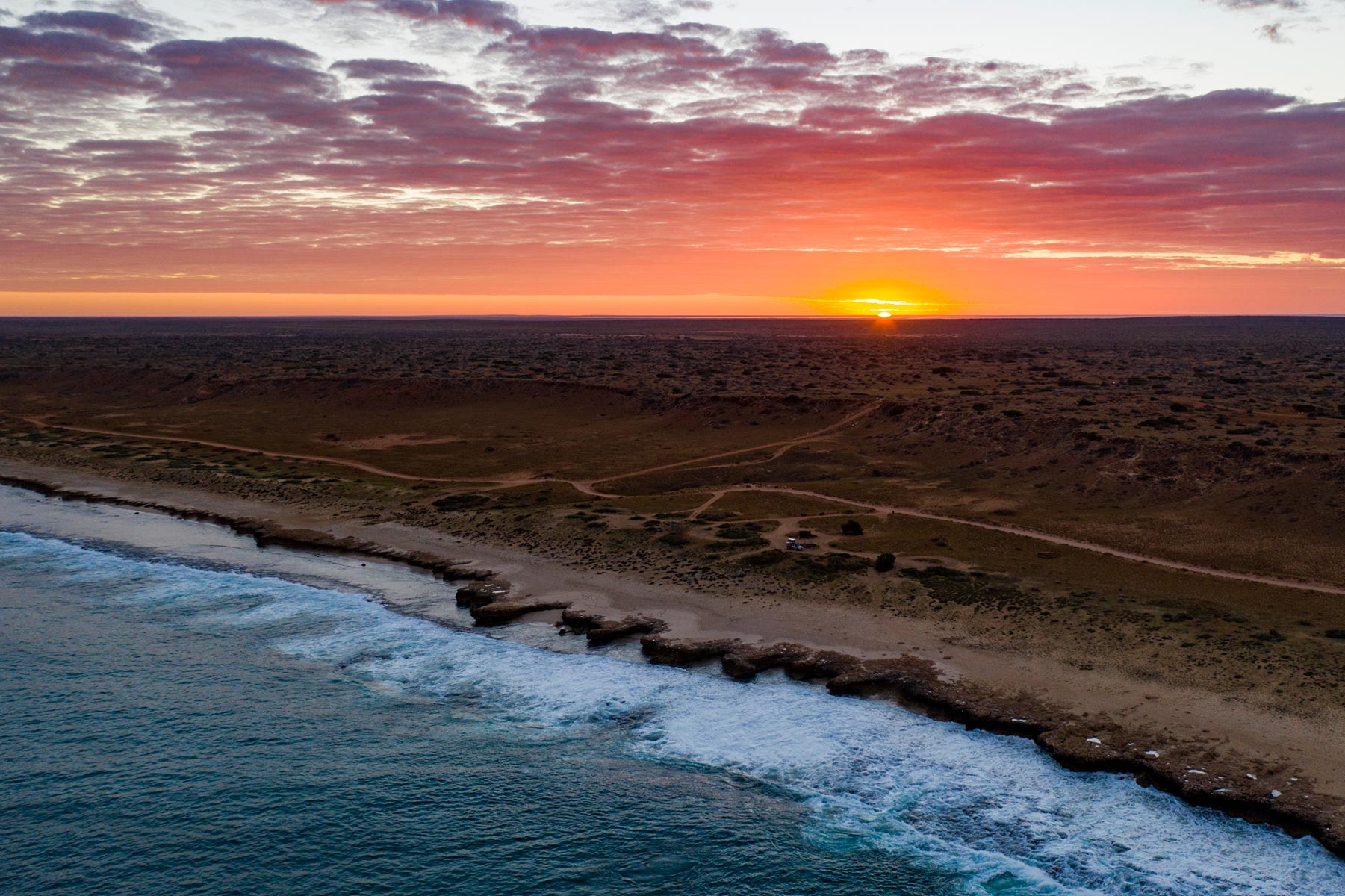
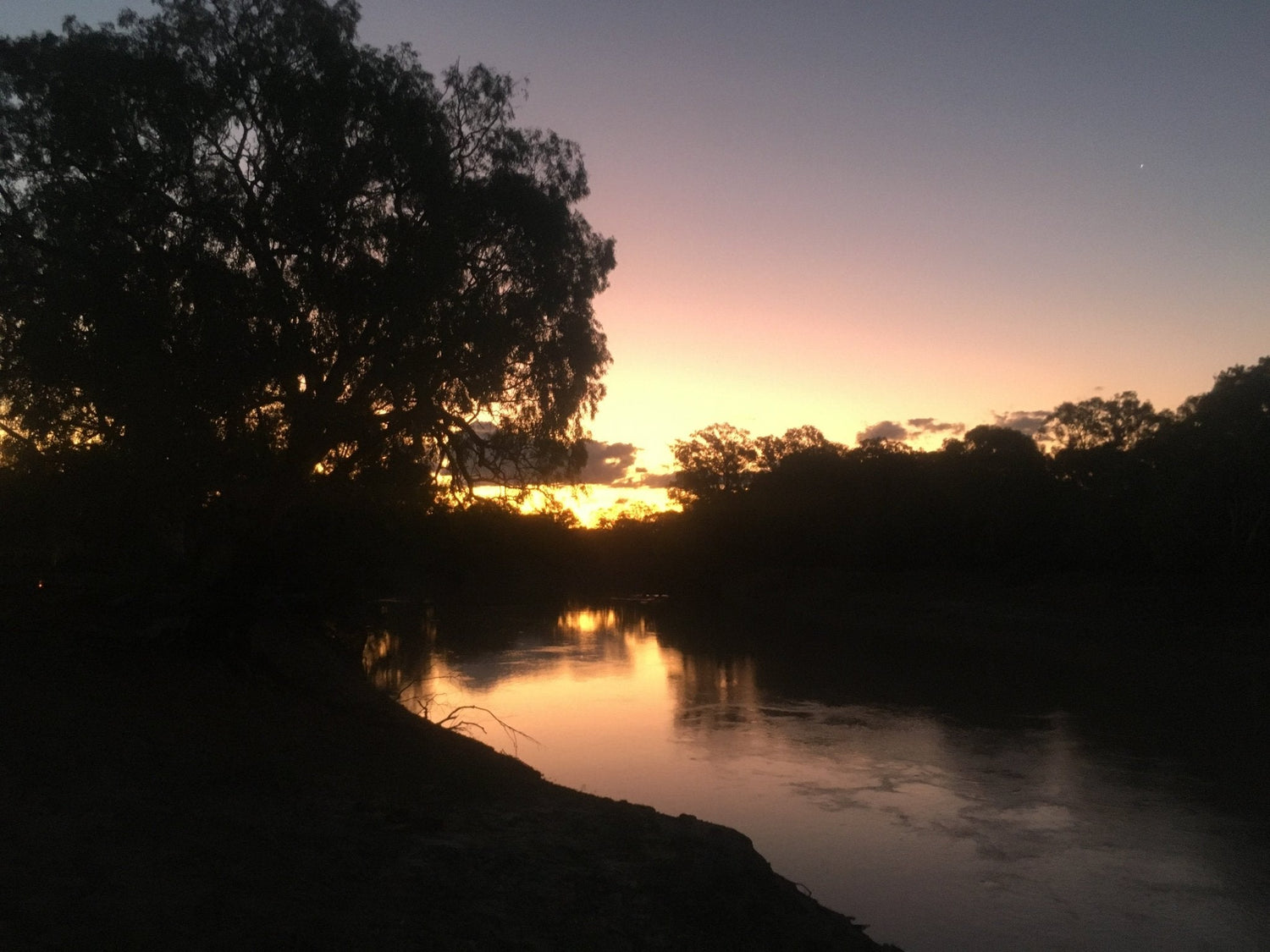
Sunset over the Darling River, Warrawong on the Darling near Wilcannia.
Welcome to the second part of our Darling River Run feature.
In part one of our journey we drove from Walgett to Louth, via Bourke and Gundabooka National Park.
In this second part, we’re continuing our ‘run’ from Louth to Wentworth via Tilpa, Wilcannia and Menindee.
Louth, Toorale National Park and Tilpa — outback pub and Henry Lawson country
Louth sits about 100km southwest of Bourke.
Blink and you’ll miss it — unless you stop at Shindy’s Inn, the town’s beating heart.

Shindy's Inn Louth looking eastwards from the northern side
This is classic Darling River hospitality. Cold drinks. Straight talk. Station country all around.

Louth Bridge
To gain a thorough appreciation of the surrounding station country, you can’t go past a visit to Toorale Homestead precinct (Yarramarra), located in Toorale National Park and State Conservation Area. This is one of those ‘barbs of a feather’ side-trips we wrote about in part one, very worthy of the detour and a place where the Darling tells many of its stories.
Getting to Toorale Homestead entails an approximately 75km drive from Bourke or an approximately 55km drive from Louth.
Despite the fact that it will feel as though you are backtracking to Bourke, we recommend it as a side-trip from Louth so that you don’t miss out on the eastern side of the Darling River Run on Louth Road, or Gundabooka National Park.
Toorale doesn’t just sit quietly on the floodplain. It’s where the Warrego spills into the Darling. It hums with history, culture and the kind of outback character you can’t fake.
This is a place of big skies, bigger stories … and a past that still lingers in the dust.
Toorale Station was first settled in the late 1850s, but it was under visionary and innovative Sir Samuel McCaughey (1880–1913) that it truly found its stride.
And what a stride it was. This wasn’t just another outback run — it was one of the giants of the Darling which, in its heyday, comprised part of the world’s largest sheep station.
Toorale Homestead was built in 1896. Toorale Woolshed was built in 1873.
In the Toorale Homestead precinct (Yarramarra), camping, fires, smoking (smoking is prohibited in all NSW National Parks) and fishing are all prohibited.
If you wish to set up camp in the Toorale National Park, the only place where this is permitted is at Darling River campground (Yapara Paaka Thuru), where there are four sites. Bookings must be made in advance, online.
There are toilets and picnic tables. You will need to bring your own potable water and cooking water. Fires are not permitted, but fishing in the Darling River is permitted here. You will need to hold a NSW Recreational Fishing Licence.
Long before fences and flocks, this was — and remains — Kurnu-Baakandji Country.
And that connection hasn’t gone anywhere.
There are more than 500 recorded cultural sites across Toorale, including scar trees, stone arrangements and burial sites.
Today, the park is jointly managed by NSW National Parks and Wildlife Service (NPWS) with the Traditional Owners, ensuring culture, knowledge and Country continue to be cared for properly.
This isn’t a tick-and-flick destination. It’s a place where pastoral history meets environmental recovery, and where culture is present, but not necessarily preserved.
And the outback feels … real.
You take your time. You look around. You let it sink in.
And the best way to do that is to join a guided discovery tour to learn directly from Kurnu-Baakandji knowledge holders.
Side trip to Hungerford
It was less than a handful of years before Toorale Homestead was built that Henry Lawson stayed in Bourke and surrounds (September 1892 to June 1893), having been sent away from the ‘watering holes’ of The Rocks in Sydney by the editor of The Bulletin, J.F. Archibald (founder of the eponymous Archibald Prize) to encourage Lawson to embrace the real (less alcohol-infused) watering holes of the true Australian outback, in search of bushmen characters, places and work to inspire his writing.
Armed with a train ticket to Bourke and £5 for living expenses, both provided by Archibald, Lawson headed away on the wallaby, looking for work. He walked to Hungerford and back, a round trip of around 285 miles (or 460km in today’s parlance).
Having myself driven between Hungerford and Bourke along the Hungerford Road, I can say that I am struggling to think of a 230km journey I would like to tramp less that this one.
Lawson did not write a journal about his trek to and from Hungerford, however a couple of stanzas from his poem The Paroo would tend to suggest that he wasn’t particularly enamoured of the country around here:
With blighted eyes and blistered feet,
With stomachs out of order,
Half mad with flies and dust and heat
We’d crossed the Queensland Border.
I longed to hear a stream go by
And see the circles quiver;
I longed to lay me down and die
That night on Paroo River.
’Tis said the land out West is grand—
I do not care who says it—
It isn’t even decent scrub,
Nor yet an honest desert;
It’s plagued with flies, and broiling hot,
A curse is on it ever;
I really think that God forgot
The country round that river.
(Henry Lawson, 1893)
And if there is any doubt what Lawson’s observations about Hungerford were, after walking 140 miles there from Bourke, an excerpt of his short story Hungerford (published in While the Billy Boils in 1896) should put short shrift to any such doubt …
“The country looks as though a great ash-heap had been spread out there, and mulga scrub and firewood planted — and neglected. The country looks just as bad for a hundred miles round Hungerford, and beyond that it gets worse — a blasted, barren wilderness that doesn’t even howl. If it howled it would be a relief.
I believe that Burke and Wills found Hungerford, and it’s a pity they did; but, if I ever stand by the graves of the men who first travelled through this country, when there were neither roads nor stations, nor tanks, nor bores, nor pubs, I’ll — I’ll take my hat off. There were brave men in the land in those days.”
So, there you have it. Lawson was certainly no devotee of Hungerford.
But was he a devotee of the pub that hosted him, The Royal Mail Hotel?
He had an ale or two here, so there’s every likelihood that he was.
And having partaken of an icy cold frothy in the beer garden here myself, I can certainly attest to being a devotee of The Royal Mail Hotel, Hungerford. It’s a beaut spot for 4WD travellers to take a breather and maybe grab a frothy one.
When I read late last year (late November 2025) that this outback icon built in 1873 as a Cobb & Co Staging Post and inn had closed its doors and was up for sale, I felt a pang of loss. True, I’ve only ever been there the one time. But I really liked it.

The Royal Mail Hotel, Hungerford
So, to read that less than a fortnight before time of publishing this article, that The Royal Mail Hotel had been purchased by new buyers and was due to reopen on Thursdays, Fridays and Saturdays, brought a smile to my face.
Anyhow, after his Hungerford expedition, Lawson picked up work as a rouseabout at Toorale, picking up newly shorn fleeces. His experiences gained from his Bourke to Hungerford return trek, the hardships of working in the Toorale Woolshed and from meeting so many resilient bushmen during his approximately ten months in these drought-stricken parts before he returned to Sydney, afforded him a treasure trove of subjects and stories that would influence so many of his future works from then on.
It was here at Toorale — and in the surrounding boom-and-bust outback country that’s dry one month and flooded the next — that Lawson found his voice.
As well as in The Paroo, you can read and hear it in:
The Great Grey Plain (1893)
Out Back (1893)
When the "Army" Prays for Watty (1893)
The Swagman and His Mate (1896)
The Boss’s Boots (1897)
When the Ladies Come to the Shearing-Shed (1897)
The Song of the Darling River (1899)
Bourke (1902)
The Ballad of the Rouseabout (1899)
Station stays
After backtracking from Toorale to Louth (and maybe an icy cold frothy one at Shindy’s Inn), if you’re keen to set up camp for the night you really can’t go past either Dunlop Station or Trilby Station.
At Dunlop Station you get to truly step back into Australia’s pastoral past. Just 14km from Louth on the western side of the Darling River, this historic property is where mechanical shearing changed the game back in 1888. Today, you can walk through that story — touring the original homestead, store and iconic 45-stand shearing shed.
Riverside campsites offer a quiet base, with shearers’ huts for those chasing a roof.
It’s history you can actually touch.
Neighbouring Trilby Station offers a family-run stay which blends heritage with genuine bush hospitality, set on a working 320,000-acre property. You’ll find everything from secluded river campsites to powered sites and cosy cottages, plus hot showers, a camp kitchen and even a pool.
Days are simple. Think canoeing, yabbying and watching birdlife along the river gums.
After long, dusty kilometres, this place feels like a reward.
Trilby Station really delivers. Be sure to book ahead.
After your station stay (or stays!), head further southwest to Tilpa, home to the famous Tilpa Hotel (established in 1894), once a paddle steamer stop and still one of the most authentic bush pubs in Australia.

Tilpa is also home to the only officially recognised war memorial in Australia that commemorates Lieutenant Henry Harbord (Harry) ‘The Breaker’ Morant, who worked in the district before serving in the Boer War (and being court martialled and executed for alleged war crimes). Whatever your ‘take’ is on Breaker Morant (whether or not you’ve ever watched Bruce Beresford’s award-winning 1980 film Breaker Morant starring Edward Woodward, Jack Thompson, John Waters, Bryan Brown, Charles Tingwell, Terence Donovan, Ray Meagher and Lewis Fitz-Gerald), this memorial is worth visiting.

Tilpa War Memorial
And if you’re looking for a no-frills camp right on the Darling? Tilpa Weir Camping Ground is as classic as it gets. Think red dirt, gum trees and scarcely a soul around. You may even have the camp to yourself.
The quiet, peaceful camp can accommodate tents, offroad camper trailers and offroad caravans amongst plenty of shade. Being a true bush camp, this camp offers no facilities, therefore all campers must be fully self-sufficient including food, drinking water and self-contained toileting.
Camping is free.
But even better than that? Tilpa Weir Camping Area is opposite the pub, where you’ll find cold beers, hearty counter meals and fuel available for purchase.

Tilpa Hotel
Wilcannia — sandstone and serenity
Wilcannia was once one of the busiest inland ports in the country. This historic Darling River port town sits on the banks of the Baaka and carries a rich and layered cultural story.
No longer a booming river port, the pace has slowed — but the history hasn’t. Wilcannia now tells its story in stone. Stroll past grand sandstone buildings, remnants of a thriving 1800s trade hub, and you’ll get a real sense of its former scale — the Post Office (1880), Wilcannia Police Station (1881), Athenaeum Library (1883), Wilcannia Courthouse (1890) and the 1896 centre-lift bridge all hint at a boom era powered by wool and river trade.

Wilcannia Court House (1890)

Centre-lift bridge, Wilcannia (1896)
But this place runs far deeper than colonial history. The Barkandji people — ‘River People’ — have lived along these banks for tens of thousands of years.
Some places are meant to be overnight stops. But every now and then, one quietly convinces you to stay a little longer.
Warrawong on the Darling is such a place.
You pull in thinking you’ll set up camp for the evening … and before you know it, a couple of days have passed. You’re still there, mug of coffee in hand, watching pelicans skim across the water.
That’s the charm of Warrawong on the Darling, where my brother and I camped for a while in 2020, before the COVID-closure of borders.

Only 2.5km from Wilcannia, the property somehow feels far removed from town life. Covering 688 hectares with 16km of Darling River frontage, there’s plenty of room to stretch out. Cast a line. Wander the riverbank. Or simply sit quietly and take in the landscape — which, out here, feels like time well spent.


Tracks weave along the river and lead to campsites with memorable names such as Pelican Point, Bondi Beach and Big Red. Each one reveals a different slice of the Baaka: sweeping river bends, calm billabongs, red earth banks and towering river gums.
If you’re chasing a place to slow down and properly switch off, Warrawong delivers.
And when you need a food resupply, Wilcannia is just minutes away.
Once you’re ready to leave Warrawong on the Darling, choose your path southwest toward Menindee — either the eastern route or the western route skirting the lakes.
Key stops along the way bring both history and landscape into focus.
Menindee and Kinchega — lakes and woolsheds
Founded in the 1853, Menindee was the first European settlement to be established on the Darling.
Around Menindee, the river spreads into the vast Menindee Lakes system — a chain of twelve lakes filled by the river — transforms the landscape into an inland oasis when full. Birdlife thrives. Evocative river red gums rise from the water.

Setting up camp between Wilcannia and Menindee
Nearby Kinchega National Park delivers classic Darling River vistas, abundant camping opportunities (entry and camping fees apply), tranquil fishing spots and a glimpse into pastoral history at the old Kinchega Woolshed, woolshed, where millions of sheep were once shorn.
History runs deep here.
Pooncarie and Mungo — ancient landscapes
Further south, Pooncarie is a small service town that once thrived on paddle steamer trade. Today, it provides a quiet riverside base for camping, fishing or a counter meal at the pub, as well as access to Mungo National Park. Part of the Willandra Lakes UNESCO World Heritage Area, Mungo is one of Australia’s most significant archaeological landscapes. This is ancient country — dry lakebeds, the sculpted lunette known as the ‘Walls of China’ and evidence of human habitation dating back more than 40,000 years. It’s a powerful place to experience, especially if you walk it with a NPWS Aboriginal guide.
It changes your perspective.
Wentworth — where big rivers meet
At Wentworth, the Darling finally yields to the mighty Murray River.
Climb the observation tower at Junction Park and you’ll see it clearly — a visible swirl of two different colours merging into one. From here, the combined Murray flows to Lake Alexandrina and the Southern Ocean.
Wentworth itself is NSW’s oldest western settlement, rich in river history and heritage trails. Nearby Perry Sandhills — shifting red dunes sculpted by wind — are well worth the short drive.
It’s a powerful way to finish the Darling River Run.
Or begin it.
The verdict
The Darling River Run isn’t tough terrain or technical driving — it’s about immersion. Red gums lining quiet banks, bird calls at dusk, long horizons and the sense of space that defines the outback. With limited reception and few crowds, it’s a place to disconnect, slow down and travel with intent.
The Darling River Run isn’t flashy.
It’s not polished.
It doesn’t shout.
It meanders — through history, through culture, through country that has shaped explorers, graziers, poets and First Nations communities for tens of thousands of years.

The Darling / Baaka doesn’t shout for attention.
It moves slowly.
It tells its stories softly.
It rewards those who travel without hurry. Because you can sit beside a billabong, listen to the birds and feel completely removed from the noise of modern life. And because you’ll experience sunsets that stop conversation mid-sentence.
Accordingly, the Darling River Run is less about ticking off kilometres and more about following the slow rhythm of the Baaka as it winds through western New South Wales.
Linking towns such as Bourke, Wilcannia and Wentworth, the route follows generally manageable 4WD tracks — gravel, clay and station roads — with distances and conditions that still demand respect. After rain, sections can close quickly and fuel stops are limited, so preparation is essential.
Fuel up where and when you can. This goes for any time, not just in the middle of a fuel crisis.
Allow at least a week to do it properly, carry extra water and fuel, and travel with the flexibility to stop often — because out here, the best memories are rarely the ones you schedule on an itinerary.
Plan well —check road conditions, book camps where required, respect cultural sites and station properties and leave no trace. For the latest information, visit Live Traffic NSW and check the Central Darling Shire Council’s Road Report on 08 8091 5155 or here.
Whether tackled in one journey or explored in sections, the Darling River Run remains one of Australia’s most rewarding inland drives — subtle, storied and unforgettable.
We recommend that you meander slowly over several days. Let your vehicle ‘walk’ the Run. Don’t run it.
Because once you commit to the Darling River Run, you’ll want the freedom to stop whenever a bend in the river catches your eye.
And it will.
Who knows? You may even find your own river bend somewhere, where you can channel Henry Lawson and pen your own ‘hymn of the Darling River’…
THE DARLING RIVER^
I want no blistering barge aground,
But racing steamers the seasons round;
I want fair homes on my lonely ways,
A people's love and a people's praise;
And rosy children to dive and swim,
And fair girls' feet in my rippling brim;
And cool green forests and gardens ever.
Oh, this is the hymn of the Darling River.
(Henry Lawson)
Acknowledgment and citations
Quoted newspaper articles referred to were sourced from Trove, a collaboration of the National Library of Australia and hundreds of partner organisations around Australia.
^1917 'THE DARLING RIVER.', Guyra Argus (NSW : 1902 - 1954), 8 March, p. 4. , viewed 27 Mar 2026, http://nla.gov.au/nla.news-article173596510
Maps
Related articles
The Darling River Run: Part one