
Words Robert Crack Pics Supplied
The Australian outback is unforgettable — vast horizons, red dirt, star-filled skies and a deep sense of remoteness. But that remoteness is exactly why preparation matters. In the outback, when something goes wrong, it can escalate quickly. Safe desert travel starts long before you leave home.

(Credit: Matt Williams)
This isn’t another ‘These are the aftermarket accessories and modifications you’ll need for your desert trip’ article.
And no, it’s not another ‘These are the equipment essentials for your desert trip’ article.
Important though these topics are, we’re assuming that you already have a bullbar, snorkel, recovery gear, traction boards, shovel and roof rack, plus storage, fuel, lighting, communications, camping, cooling and power solutions. We’re also assuming that you already have a quality compressor, tyre deflator, puncture repair kit, fire extinguisher, comprehensive first aid kit/s, comprehensive tool kit (if you need us to itemise what tools you should carry, perhaps you’re not quite ready for a desert trip!), spare POL (petroleum, oil and lubricant products), battery jump starter and leads, spare fuses and spare globes.
And know how to deploy them. If you don’t know how to change a tyre, replace a fuse or inspect an air filter, learn before you go.
Remote recovery isn’t cheap.
In the unparalleled words of French chemist and microbiologist Louis Pasteur, “Le hasard ne favorise que les esprits préparés.” English translation? “Chance favours the prepared mind.”
Yes.
That is what this article is about: the prepared mind and preparation for desert travel.

The desert doesn't care
The desert doesn’t care how new your rig is.
It doesn’t care how many trips you’ve done before.
And it definitely doesn’t care if you meant to check that loose bolt ‘next week’.
When you’re in the outback, preparation isn’t optional — it’s the difference between a cracking adventure and a long, dusty wait for help. So, before you point your bonnet toward desert country, let’s talk about getting your vehicle, gear and plan dialled in properly.

Load smart, travel safer
Desert travel starts in your driveway.
The way you pack your 4WD directly affects how it handles corrugations, dunes and emergency manoeuvres. Get it wrong and you’ll feel it in the steering, suspension — and your wallet.
Start with the heavy stuff — tools, spare parts, water, recovery gear.
Load these items low (but still readily accessible!) and as close to the centre of the vehicle as possible. This keeps your centre of gravity down and reduces strain on springs and shocks over long distances.
Even a slight imbalance, repeated over thousands of kilometres of corrugations, can lead to uneven tyre wear, fatigued suspension and poor handling.
No balance = no second chances.

(Credit: Matt Williams)
Spread the weight evenly
Think front-to-back and side-to-side.
If one corner is carrying more load, that corner will cop more punishment. Over time, that can mean cracked mounts, bent components or worse. A quick visit to a public weighbridge before departure gives you peace of mind.
And remember: every bullbar addition, dual battery, drawer system and long-range tank eats into your payload.
Know your GVM (gross vehicle mass), know your GCM (gross combined mass) if you’re towing and don’t exceed either.
Insurance companies tend to frown on overloaded vehicles.

Cargo barriers are non-negotiable
If you’re touring in a wagon-style 4WD, ensure that you have a cargo barrier.
Even well-strapped gear can become airborne in a sudden stop or rollover. A barrier separates you from hundreds of kilos of equipment.
It’s one of those upgrades you hope you’ll never need.
But if you do, you’ll be glad it’s there.
Even a well-fitted, high-quality cargo net is better than having no cargo barrier at all.
Roof racks: use with restraint
Roof racks are brilliant — when used properly.
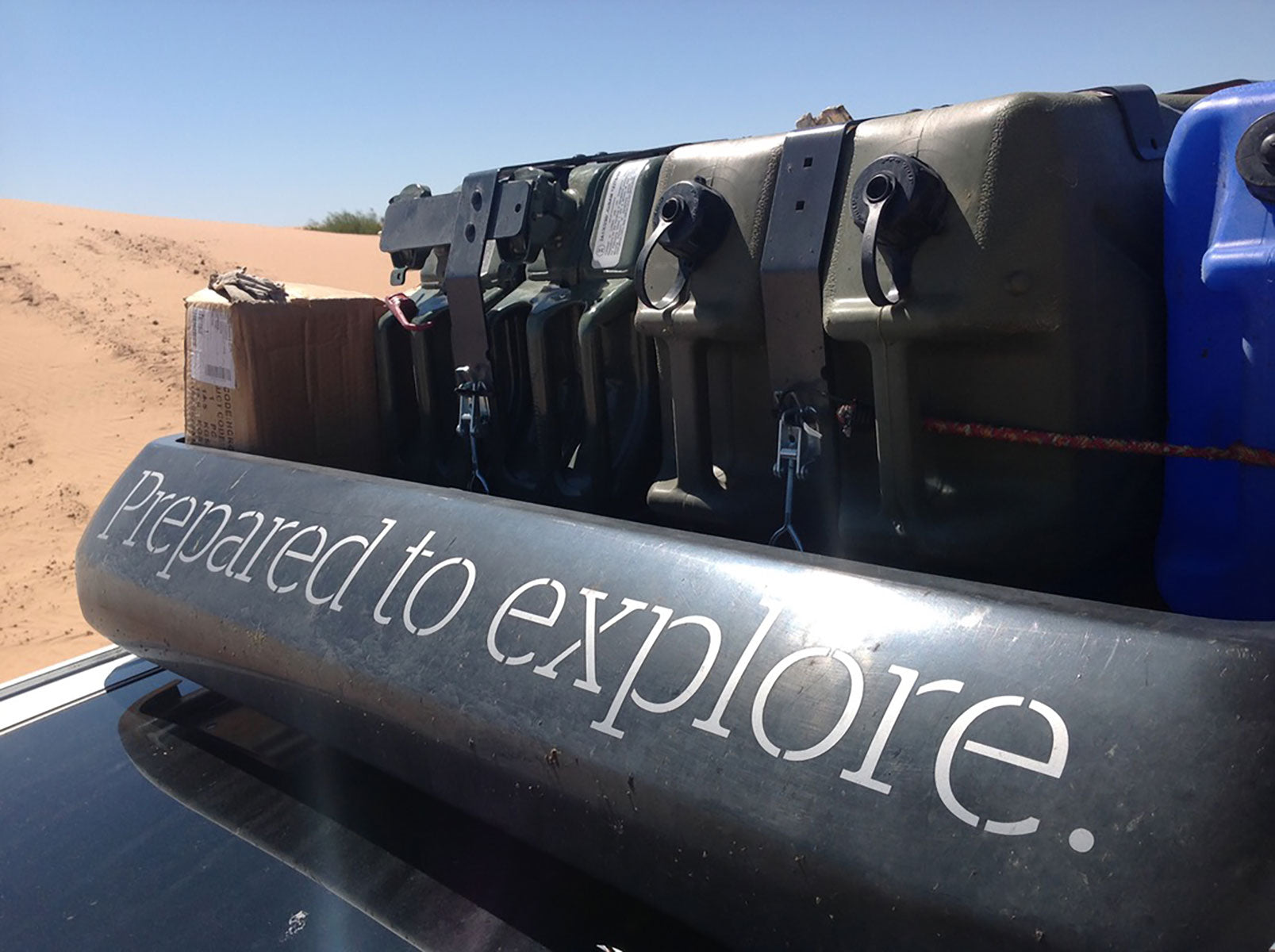
They’re ideal for long or bulky but relatively lightweight gear such as swags, camp chairs, sand flag, long-handled shovel or empty storage tubs. But piling heavy jerry cans and toolboxes on the roof will raise your centre of gravity and compromise stability on side slopes and dunes, where a high centre of gravity can significantly increase rollover risk.
If you must carry weight up top, keep it forward and secure it properly with quality ratchet straps or a cargo net.
And don’t forget — roof loads increase fuel consumption, not only due to the weight but also the impact that some items have on aerodynamics.
Minimal weight means better handling, improved fuel range, less mechanical stress and easier dune climbs.
It’s that simple.

Canning Stock Route
Mechanical prep at least four weeks out
A desert trip puts sustained stress on your engine, drivetrain and cooling system.
If your vehicle mostly does school runs and short commutes, it’s time for a thorough check.
Book it in for a service at least four weeks before departure so there’s time to fix anything unexpected.
Have your mechanic inspect the engine oil and filters, fuel filter (critical in dusty conditions), transmission and transfer case fluids, coolant condition, brake pads and fluid, belts and hoses, and all suspension mounts and bushes.
Corrugations create relentless vibration. Every mount, bracket and bolt should be secure — from roof racks to battery trays.
Dust ingress is another enemy. Clean and condition door and window seals to minimise the fine red dust that gets everywhere.
And yes — make sure the air-conditioning works.
You’ll thank yourself in 45-degree heat.

Tyres: your lifeline to the sand
Your tyres are your vehicle’s only contact with the track.
Or, at least, they should be!
For desert touring, most experienced drivers favour light truck construction all-terrain tyres with strong sidewalls. They handle heat, rocks and scrub better than passenger-rated rubber.
Before you go:
Ensure tread depth is healthy (2.5mm minimum is a baseline — more is better)
Check for cracks, bulges or sidewall damage
Confirm that your spare is roadworthy
And carry at least one full-size spare — two isn’t overkill in remote country
Know your recommended pressures — the figure on the tyre sidewall is a maximum, not your operating target

Make sure to pump tyre pressures back up when going back onto sealed roads (Credit: Emma Warren and Sam Richards)
Fuel and water: plan with margins
Route planning is more than drawing a line on a map. Study distances between towns and fuel stops. Then factor in reality:
Towing increases fuel use, so does carrying heavy loads.
Low tyre pressures in sand increase fuel use. Fuel economy (actually, lack thereof!) in soft sand can surprise you.
Four-wheel driving in soft terrain increases fuel use. Low-range driving at 15–20km/h, repeated dune climbs and heavy loads chew through litres quickly.
Develop the habit of topping up whenever fuel is available. At minimum, carry enough to reach your destination and return if conditions force a retreat. Long-range tanks and properly secured jerry cans give you options — and options equal safety.
As a rough guide in desert conditions:
Fuel use can blow out to 20–30L per 100km
Water consumption: 3–5L per person per day minimum
Carry extra, always
One litre of water weighs one kilo — so plan storage carefully and keep it low in the vehicle.
Self-sufficiency: pack with purpose
Desert travel rewards simplicity.
The more gear you carry ‘just in case’, the heavier your vehicle becomes. Extra weight increases fuel burn and mechanical wear.
If you’re not certain you’ll use it, leave it behind (unless it's related to navigation, safety or survival!).
Prioritise multi-use items and pack by system:
Kitchen gear together
Recovery kit accessible
First aid kit/s within reach
Communication gear within arm’s reach
Sunscreen and insect repellent within reach
Prescription medications within reach
Emergency water easy to grab
Several hundred dollars in cash for fuel in case the roadhouse EFTPOS isn’t working
Picture this: you’ve got a flat tyre in 40-degree heat, and your jack is buried under three weeks of supplies. Almost worse? Your fly repellent is buried under your jack.
If you don’t find that picture appealing, pack for access. The last thing you think you’ll need should be loaded first.
As for the first aid kit and communication gear? Everyone in the vehicle should know where these are. In a rollover, you may not be the one reaching for them.
A dedicated grab bag is essential. It should contain 72 hours of water, food, survival basics and your satellite communication device. Store it within arm’s reach of the driver or front passenger.

Gary Junction Road
Survival
Self-avowedly a long way off being any kind of survival expert (I’m not!), during my time serving in the Australian Defence Force (ADF) I became very acquainted indeed with Australian Army, Manual of Land Warfare, Part Three, Volume 2, Pamphlet No 7: Survival, and its shelter construction, water procurement and food foraging focus, the principal author of which was Major Leslie Hiddins AM (a.k.a. ‘The Bush Tucker Man’).
I learnt enough in the ADF to know that when it comes to your desert travel survival preparation, you should certainly not rely on an online article such as this one.
You should rely on the writings of experts such as Les Hiddins, Bob Cooper (author of Outback Survival), Richard Graves (author of Australian Bushcraft: A Guide to Survival and Camping) or George Ivanoff (author of The Australia Survival Guide).

Madigan Line
Communications: because phones don’t work
Telstra is correct when it says its 4G network reaches more than 99 per cent of the Australian population. But that impressive figure looks very different when you shift from population to land area. Telstra’s 4G footprint spans around 2.7 million square kilometres — a huge area if you’re camping alone in Argentina (2.74 million square kilometres), but far less reassuring when you’re camping alone in Australia. Here, that same coverage figure means that almost 5 million square kilometres aren’t covered.
Mobile reception covers only a fraction of Australia's continental land mass. So, depending on where your travels take you, it’s worth thinking beyond mobile coverage. Consider carrying a satellite phone, a personal locator beacon, and/or a handheld UHF two‑way radio to stay connected and stay safe.
In desert country you should carry:
UHF radio (vehicle-mounted, with quality aerial)
Satellite phone or two-way satellite communicator
Personal locator beacon (PLB)
PLBs are for genuine life-threatening emergencies only. Most situations are better handled with two-way communication.
Leave a detailed trip plan with someone at home. Include:
Route
Planned camps
Expected dates
Contact details
Call-in schedule
Set regular ‘proof-of-life’ check-ins.
It’s simple. And it works.

Satellite phones provide essential two-way communications
Permits, parks and planning
Many desert routes cross Aboriginal land or national parks.
Permits can take time to process, so organise them early. Research seasonal closures — some deserts shut during extreme heat. As just one example, Munga-Thirri–Simpson Desert National Park closes from the start of December to mid-March due to anticipated extreme daytime temperatures.
There is no ‘single source of truth’ for permits to transit or visit Aboriginal land. We recommend that you visit the relevant state or territory government websites and search for ‘Aboriginal land permits’.
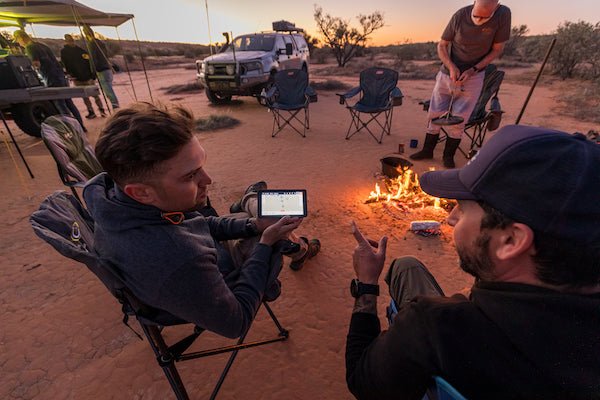
Use detailed mapping — both digital and paper.
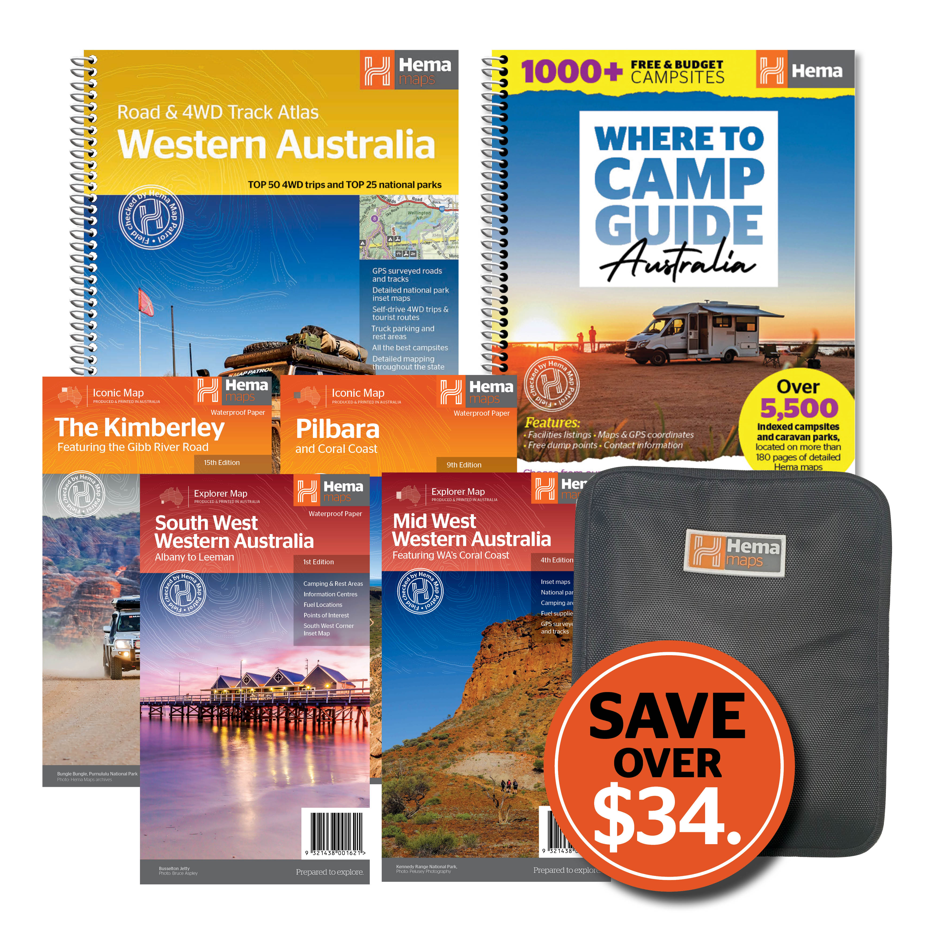
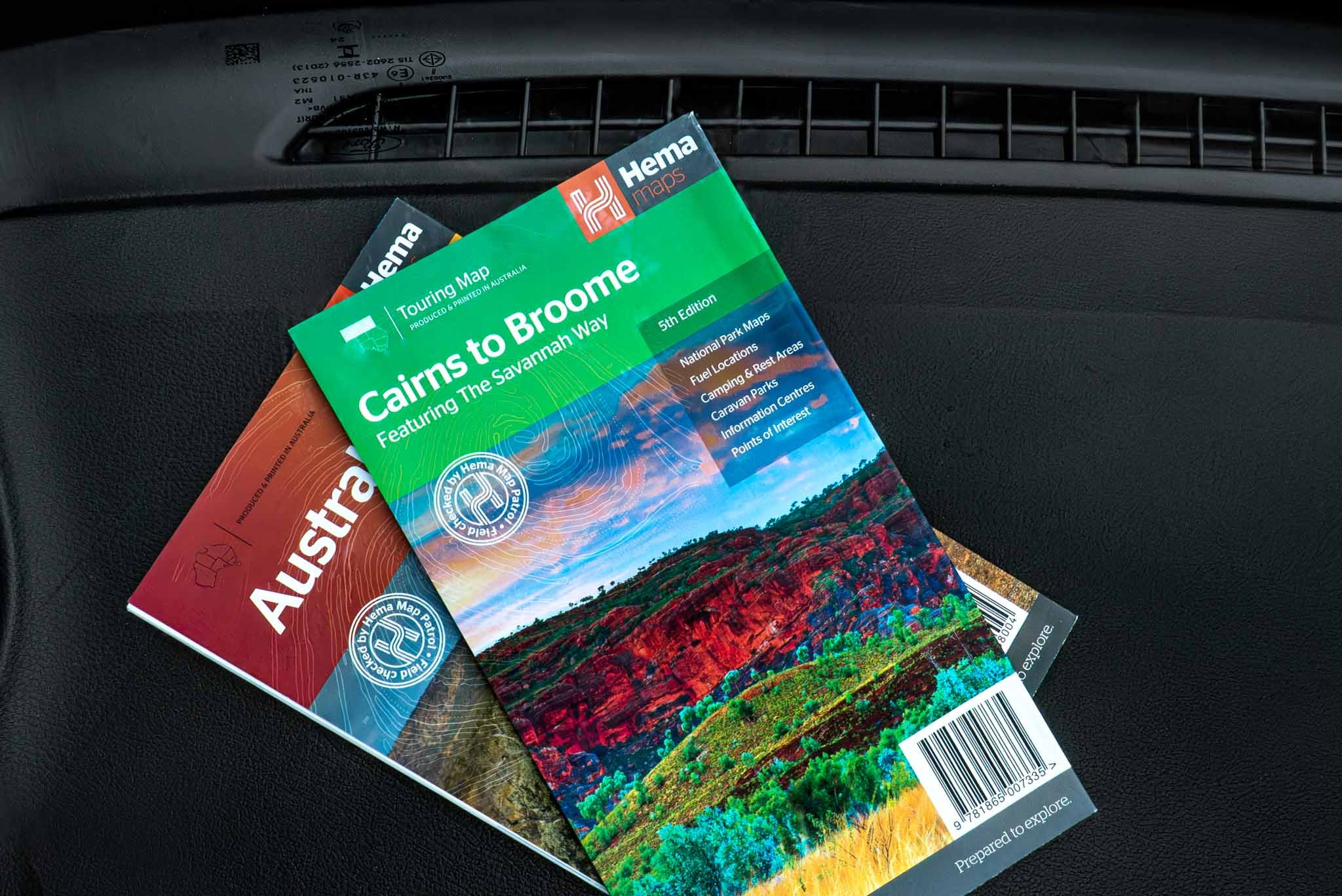
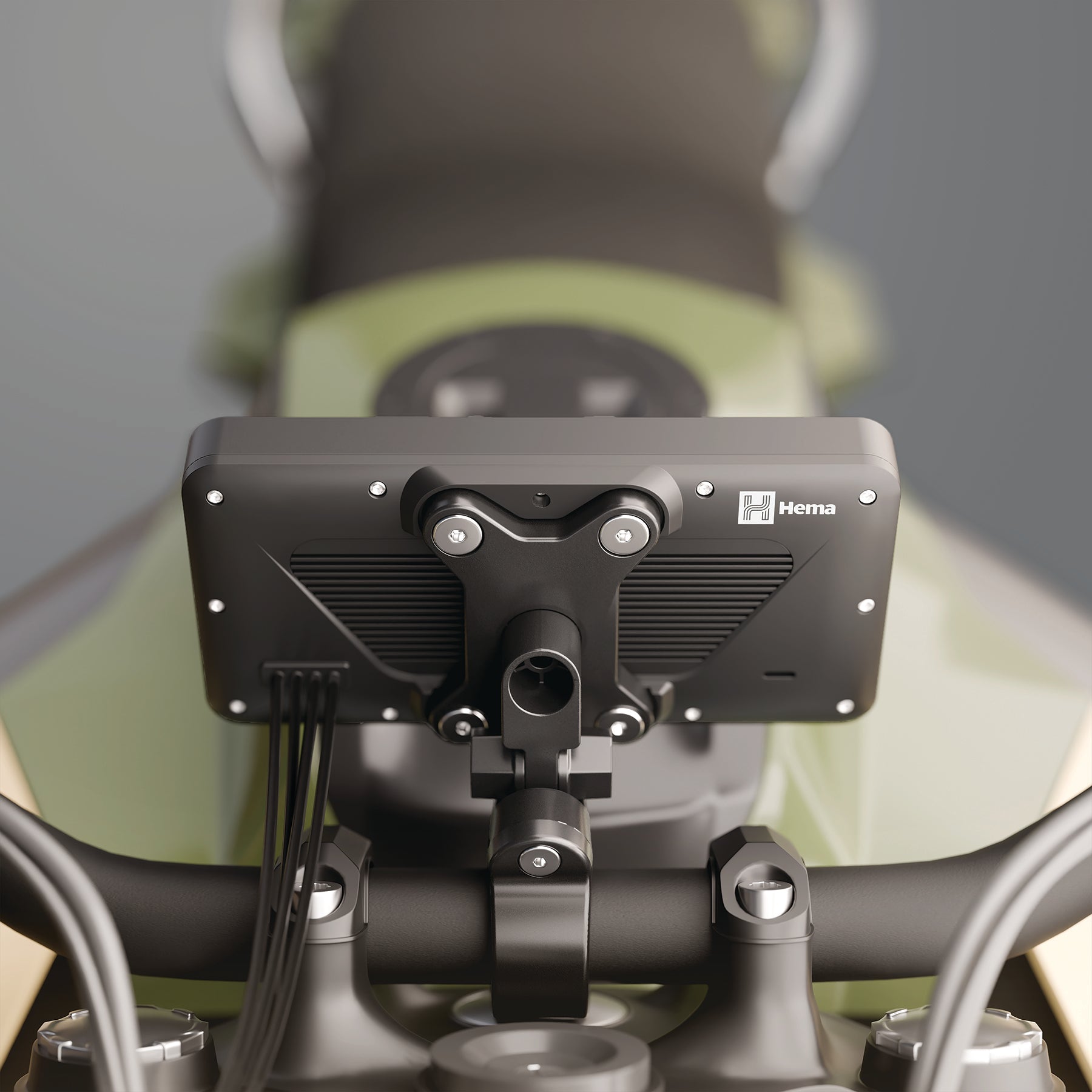
Electronics fail. Batteries flatten. Screens crack. Quality paper maps such as those in Hema Maps’ Great Desert Tracks Atlas & Guide are still gold.
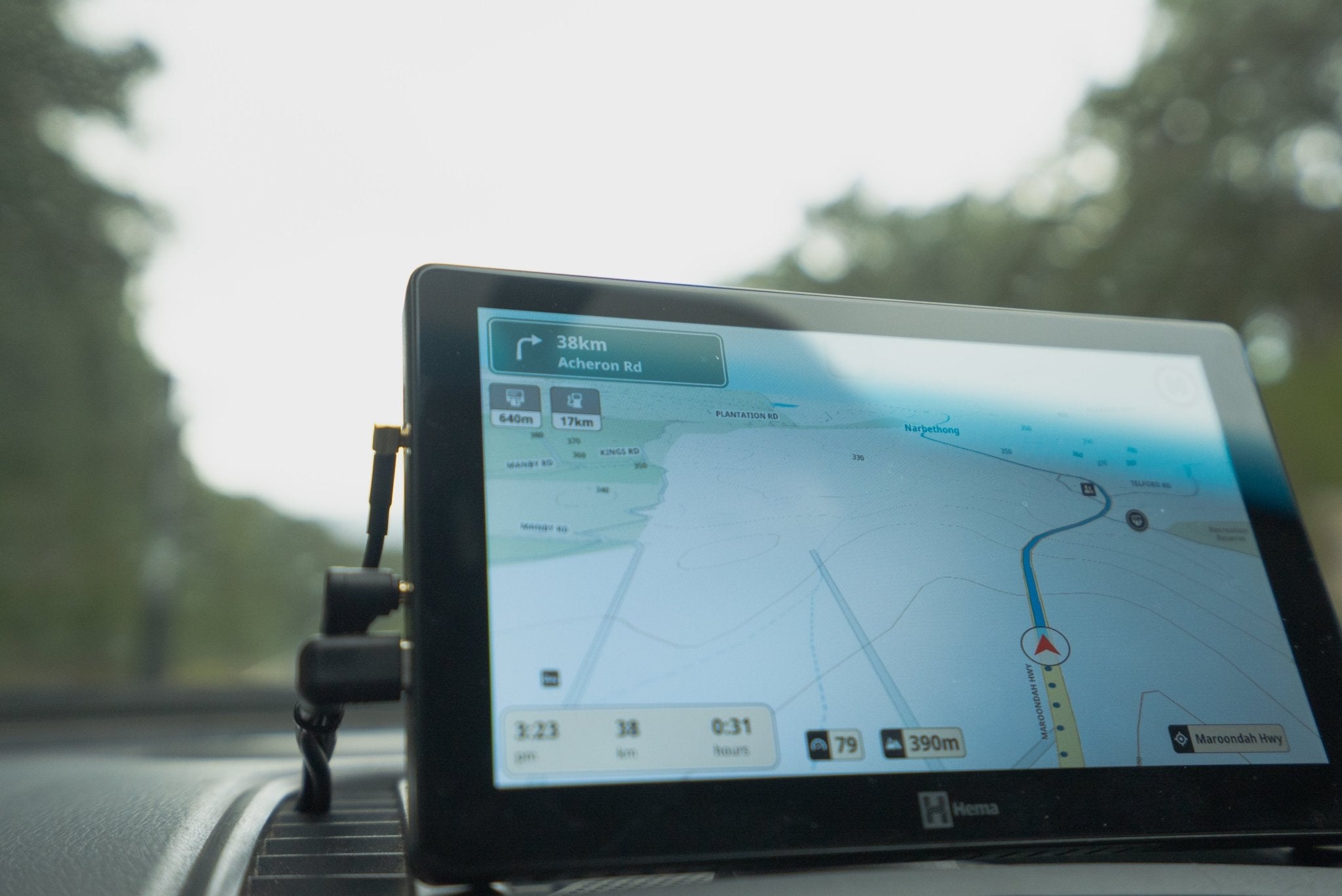
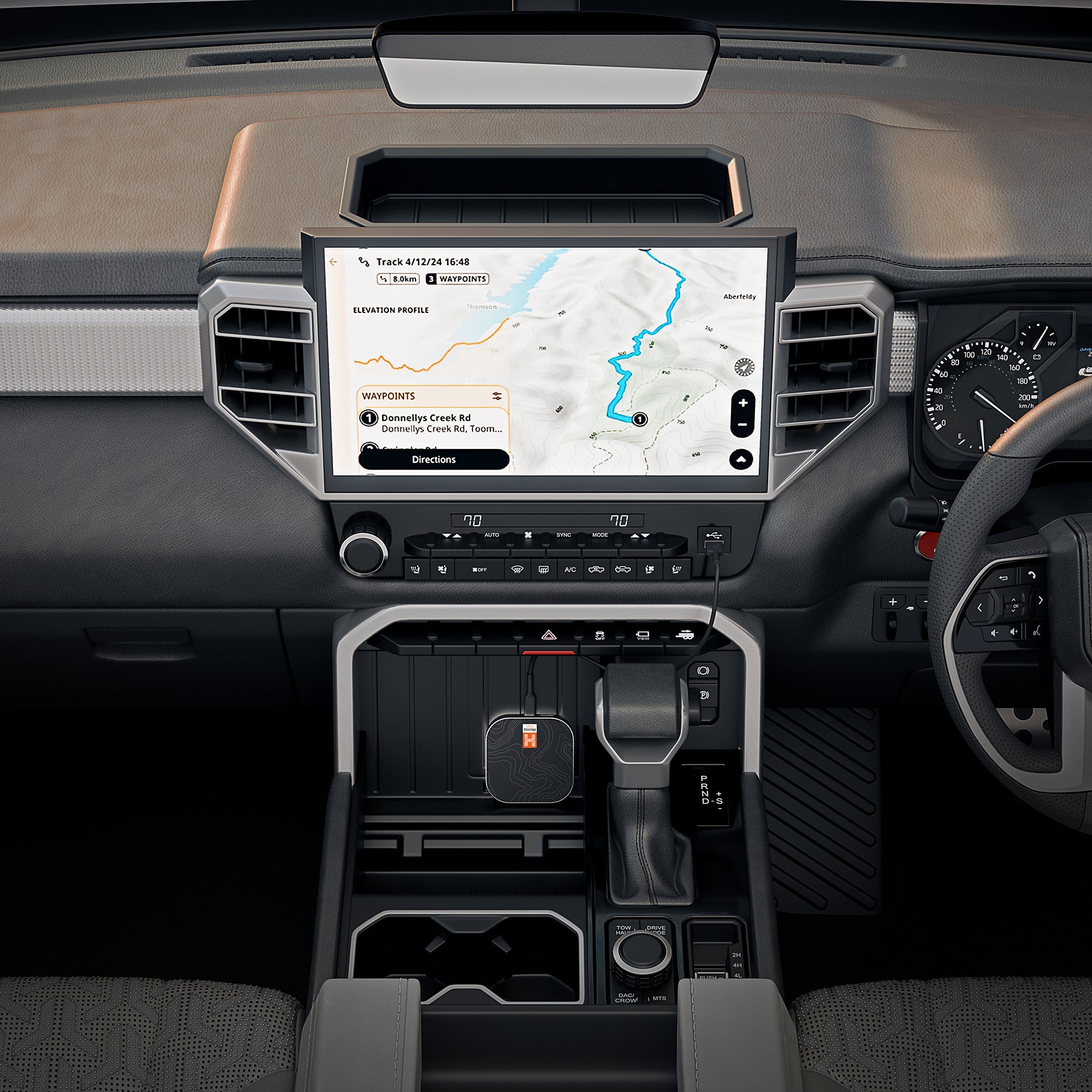
Use both digital navigation and detailed paper maps. GPS is highly accurate, but you should always zoom out and confirm your route makes sense. Check weather forecasts and road conditions before committing to remote tracks.
And always let someone know where you’re going — and when you’ve arrived.

Permits are required to travel on some roads (Credit: Allison Watt)
Be prepared, not invincible
Be prepared. Be persistent. But don’t try to be invincible.
Why? Because you’re not.
The desert is a place of raw beauty and brutal honesty. Spinifex plains. Endless dunes. Silence that hums in your ears. But it rewards preparation and punishes complacency.
Service the vehicle, balance the load, secure the gear, plan your fuel and know your limits.
Do that, and you’ll experience the desert magic properly — not from the side of the track.
Because in the desert, confidence comes from preparation.
And preparation starts now.

Morton Craig Range, Anne Beadell Highway
Maps & Guides
Great Desert Tracks Atlas & Guide
Birdsville & Strzelecki Tracks Map
The Beadell Roads Atlas & Guide
Related articles
Outback 4WD vehicle preparation tips
Outdoor Adventure Must-Have: First Aid Kit