
The Goldfields of Western Australia
Julia ventures beyond Australia’s largest outback city, Kalgoorlie, to discover its gold rush rival, Coolgardie.
Located 556 kilometres inland east of Perth in red dirt country, it’s hard to imagine that Coolgardie, a town of fewer than 800 residents, was once the golden goose of Western Australia.
Gold was first discovered in Coolgardie in 1892. The following year, an influx of prospectors, traders and professionals descended on the region to seek their fortunes, with the “tent town” soon declared a municipality. By the late 1890s, canvas walls were replaced by bricks and stone. The “Mother of the Goldfields” was the state’s third-largest town behind Perth and Fremantle, with roughly 15,000 residents and another 10,000 in the district. It had 26 hotels, six banks, two stock exchanges, and eight newspaper outlets.

But at the turn of the century, it was another story: Coolgardie’s boom was quick to bust. The old Mother endured a great deal of desertion and devastation: World Wars, prospectors moving to nearby towns, Kalgoorlie or Boulder, fires, mine closures, and buildings sold for scrap.
Today, few remnants of Coolgardie’s rich heritage are strewn across the main strip, Bayley Street; the wide thoroughfare, built for camel-train hairpin turns, forming part of the Great Eastern Highway, and the start/end of the 965-kilometre Golden Quest Discovery Trail.
While many simply bypass Coolgardie en route to Perth or Kalgoorlie-Boulder (38 kilometres away) or choose to stay a wee bit longer than a toilet break, I’m giving myself two days to explore the birthplace of WA’s gold rush and go beyond face value.
The beginnings of a golden discovery
The Coolgardie Visitors Centre is an excellent starting point for grasping Coolgardie then and now. Located in the former Warden’s Court, built in 1898, the beautifully preserved Federation Academic Classical pink stone building with original red Marseille tiles, is the town’s most imposing attraction.

Besides exuding good looks, the historical landmark is also home to the Goldfields Exhibition Museum. Entrance is the price of a coffee or less ($6 adults, $3 seniors), with the mining-centric museum worth allocating a few hours to explore. Exhibits are spread across multiple rooms on two floors, depicting Coolgardie’s sharp rise and decline, as well as a few unexpected intrigues.
If ancient glassware is your thing, the museum is home to one of Australia’s largest antique bottle displays. Displayed along the walls of the old courtroom, the Waghorn Bottle Collection features unearthed glassware dating back to 300 BC. The outback oddities continue with an old-school wellness display of 18th and 19th-century medicines and retro food tins.
But perhaps most unusual is the presence of a century-old scuba suit. The bulky beige canvas outfit stands behind class in the Varischetti Mine Rescue exhibit. It tells the incredible, this-should-be-a-movie story of Italian miner Modesto Varischetti, who became trapped in an underground mine near Coolgardie in 1907. A storm had it and flooded the mine, with Varischetti confined to a small tunnel 10 levels deep. Remarkably, Varischetti had an air pocket and managed to communicate to the outside world – albeit with knocks – he was alive.
It was a race against time, with a train departing from Fremantle bringing the required supplies and expertise, including two divers, to save Varischetti from the literal depths of despair. As water was being pumped out, the divers made several visits to Varischetti to supply him with food, candles, and other necessities for his survival. Varischetti’s plight captured the world’s attention, and relief came on day nine when, with the water level low enough, the divers rescued the entombed miner. The Varischetti Mine Rescue Site is 12 kilometres north of Coolgardie and can be viewed behind a chain-wire fence. Despite there not being much to see, it’s a place to reflect on the resilience and heroism of Varischetti and the community.
The town that once stood

It’s sorrowful to see the museum’s timeworn photographs of the former Gold Town. Coolgardie was once a place of architectural grandeur, with buildings in the Federation Classical and Gothic styles. Many buildings that once stood became unfortunate victims of fire and disrepair or were decommissioned to be rebuilt in Kalgoorlie. Thankfully, some beauties remain.
Warden Finnerty’s Residence is one of Coolgardie’s notable heritage homes, a few minutes’ drive from the main drag. Built in 1895 for the town’s first resident magistrate and mining warden, John Michael Finnerty, the high-ceiling stone and brick home was quite the luxurious upgrade from a weather-battered canvas tent. Wooden beams painted forest green and pebble-inlaid eaves add elegance to the hilltop residence overlooking the township and the surrounding forest.
As for some Coolgardie trivia, the home was constructed by brothers Robert and Arthur Bunning, who went on to add many splashes of green paint around the country, establishing what is now one of Australia’s biggest retailers, Bunnings. The house is currently closed due to staffing issues, but it’s still worth a drive-by.
Another Coolgardie icon is the Old Railway Station. Located next to the free 48-hour RV, the station made international news when it first opened in 1896, with travel to and from Perth taking hours, not days (it came in handy saving Varischetti!). Train services ceased to Coolgardie in 1971, and the station is now used as an arts hub and recording studio. An unfortunately vandalised steam locomotive is stationed on its tracks, free to hop into the cab.
More of Coolgardie’s mining heritage is on show at Ben Prior Park along Bayley Street. The free, open-air historical museum – or industrial wasteland – includes old farming machinery and modes of transport, from a dough-making machine to a wooden horse-drawn carriage with wagon wheels as big as a dining table, scattered across red earth. Speaking of red earth, follow the Coolgardie Bluff Cultural and Heritage trail to appreciate the region’s cultural importance to the local Indigenous people as well as climbing the bluff for peak views of Coolgardie.
While many heritage plaques are dotted around town, a few commemorating structures that once stood, the most interesting to wander is the Kunanalling Premier Hotel Ruins. Located 36 kilometres north of Coolgardie, the single-storey pub is the only surviving building of ghost town, Kunanalling. It’s Roman ruins in the outback, with red-stone arched doorways and windows opening onto a barren landscape. Former rooms of opulence are now covered by overgrown carpets of taupe straw grass.
More recently, outback abandonments can be found roughly 30 kilometres north of Coolgardie (or 6 kilometres south of Kunanalling) with an unofficial art sculpture walk along salt plains. Works include black swans cut from tyres; four dogs made of heavy-duty gumboots. The pit-stop provides a good laugh.
For more art, Judumul Gallery, in the town’s old courthouse, sells locally produced Indigenous artworks and wearable items. It also has a free op shop nook. How kind.
Where to hang out with the locals

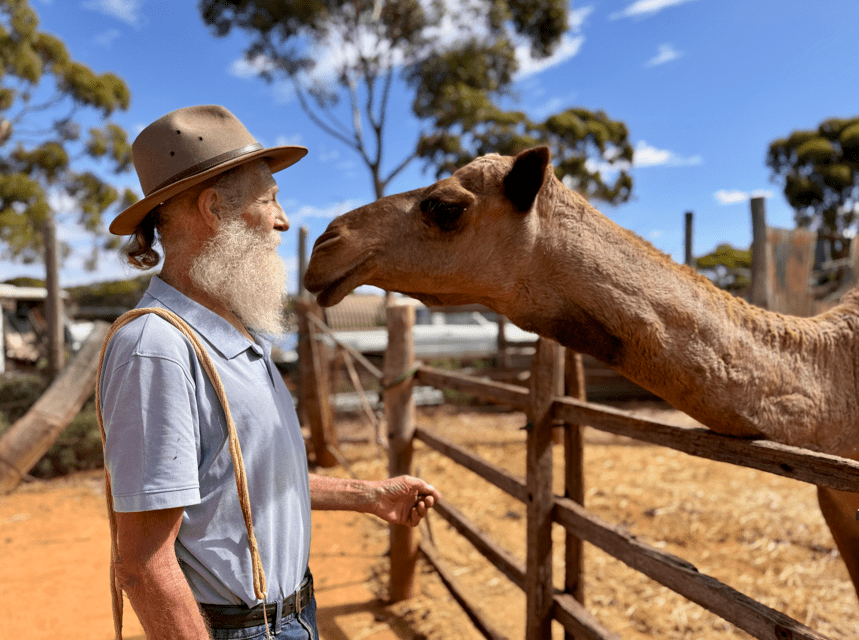
One of Coolgardie’s most interesting characters is Noel McKay. In 1986, he opened Coolgardie Camel Farm, 4 kilometres west of town. The white, long-bearded McKay is old-fashioned, taking bookings only by phone and accepting cash ($10 per person). It’s well worth the forward planning to visit the off-kilter farm.
Once home to over 170 camels, it currently has five. Still, besides the one-humped mammals being the key drawcard, an unexpected delight is McKay’s vast antiques collection, dating as far back as the 1890s. McKay describes his green farm shed as a “Doctor Who” time portal, with the backyard museum displaying camel-merch, trinkets, smoke pipes, glass bottles, indigenous artefacts, and rusted farming equipment, small and large. A curious place (that could also do with a good dusting!).
Another bargain outing is the Toolshed Smoke & Grill. The blue café along Bayley Street sells great coffee, sandwiches, and burgers at reasonable prices. Pies are $5, with the chunky smoked beef brisket and gravy pie a delicious steal.
Coolgardie’s last remaining pub, the Denver City Hotel, acts as the town square. Although I was warned the food could be hit-or-miss, a generous plate of chicken schnitzel and sides gets my approval. Still, many don’t come here to be fed; it’s a place to sit along the U-shaped bench and have an ice-cold beer and start a conversation with whoever is sitting on either side, whether a local or FIFO worker. I chat to locals about the scandalous 2017 documentary “Hotel Coolgardie,” which tells the story of two Finnish backpackers who became barmaids at the very pub where I’m seated. It seems like an episode many would rather forget happened.
I call it a night at Coolgardie Caravan Park, a 350-metre walk from Denver City Hotel. The park has 20 gravel sites (powered and unpowered) at roughly 8.5 metres wide and 8.5-9 metres long. Guests are a mix of holidaymakers and miners. It’s good to see this mining ghost town alive.
Fast Facts
Coolgardie Caravan Park
P: (08) 9026 6009
E: bookings@coolgardiecp.com.au
W: Coolgardiecp.com.au
Coolgardie Camel Farm
Bookings must be made in advance
Phone: (08) 9026 6159
Coolgardie Visitors Centre
P: (08) 9026 6090
E: visitorcounter@coolgardie.wa.gov.au
W: coolgardie.wa.gov.au
Judumul Gallery
P: 0447 287 614
E: gallery@judumul.org.au
W:judumul.org.au
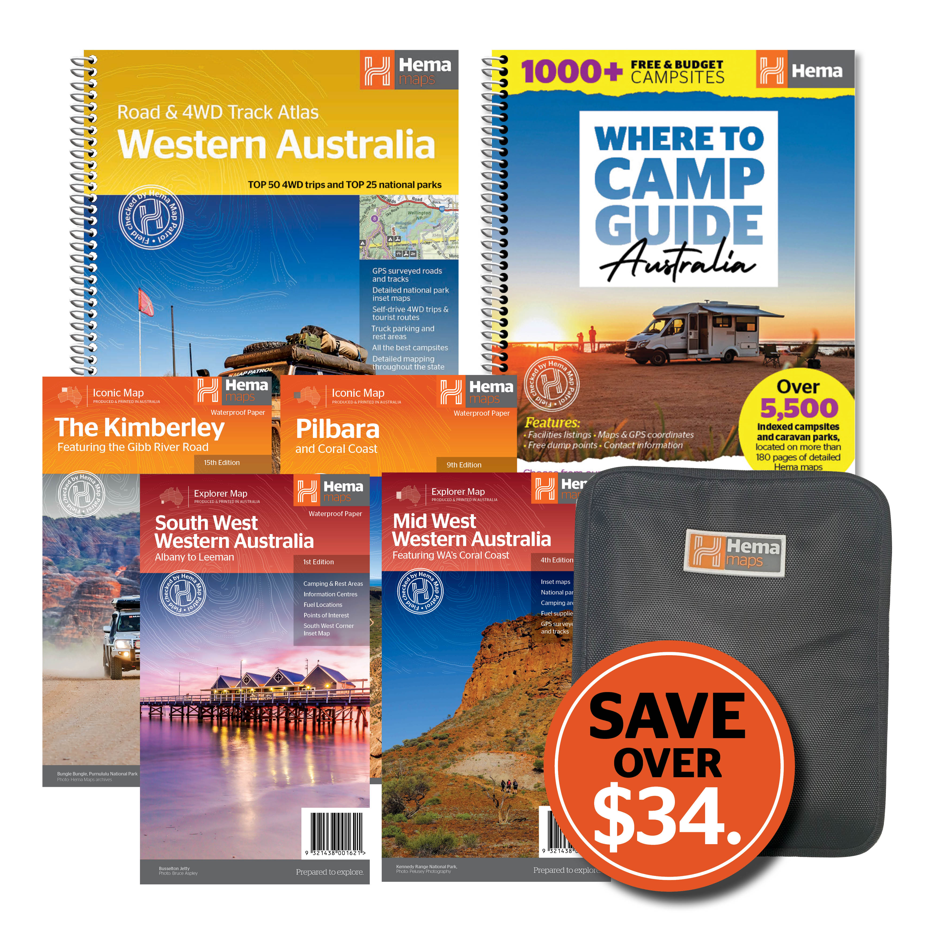
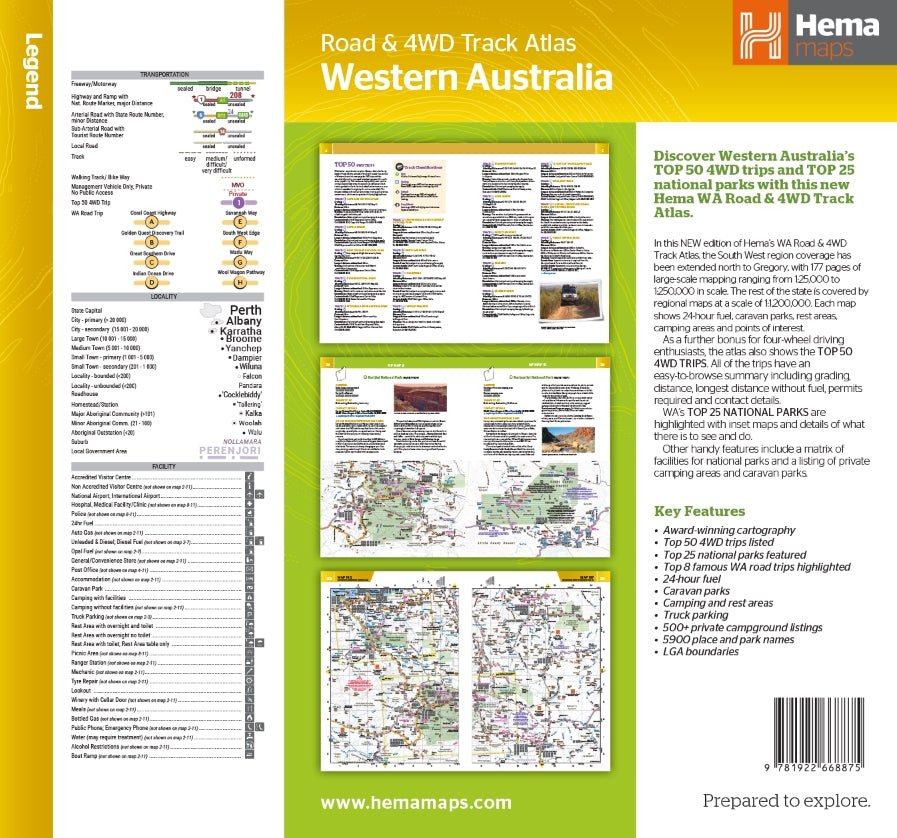
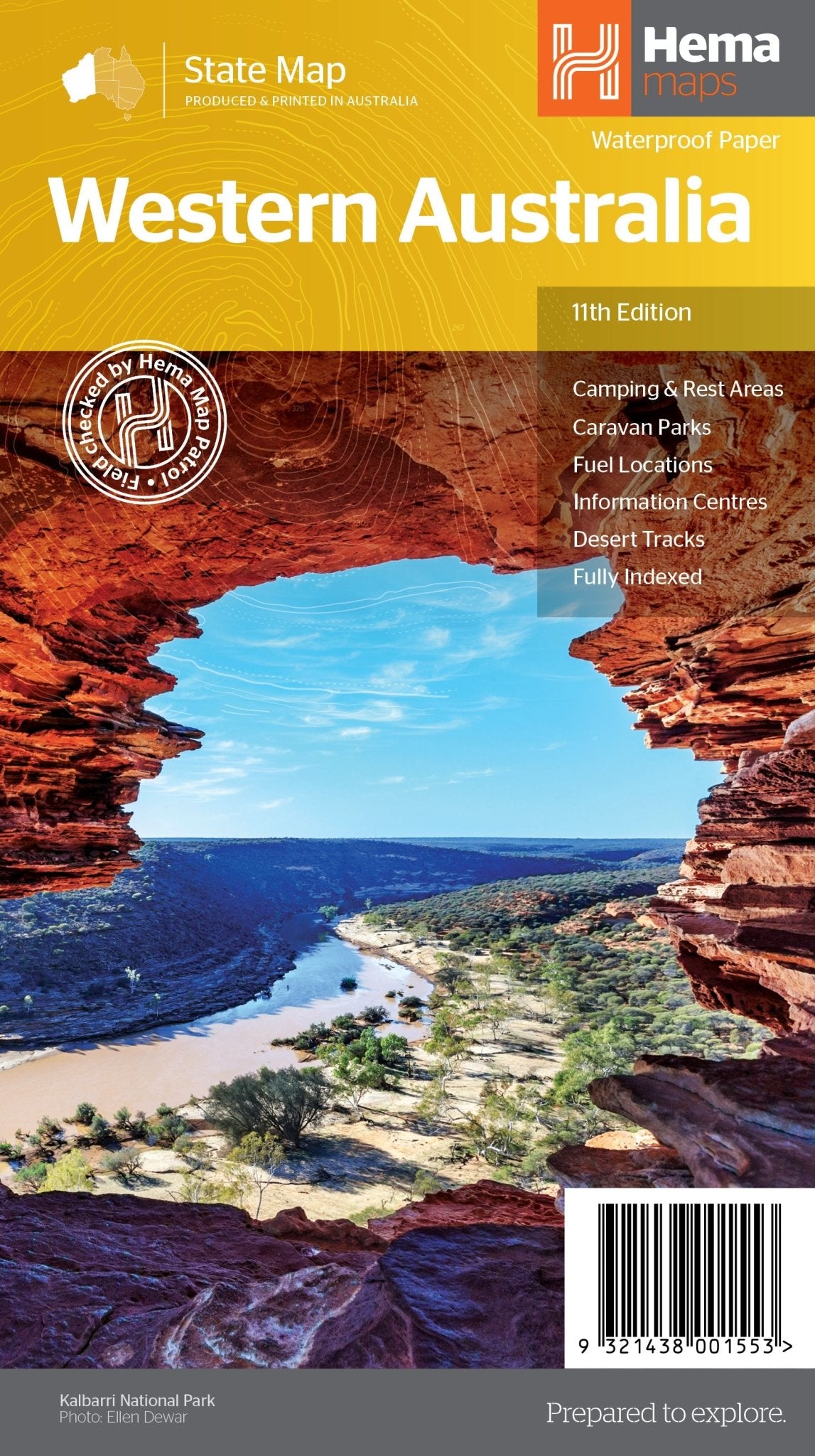
Travelling through Western Australia via Kalgoorlie and Coolgardie is a journey through some of the state's most iconic goldfields, before opening the door to spectacular coastlines, wildflower country and remote outback landscapes. Whether you're continuing south towards Esperance and Margaret River or heading north into the Mid West, having the right map makes planning your adventure easier. Explore our range of Western Australia State Maps, South West Western Australia maps and Mid West Western Australia maps to discover scenic drives, national parks, camping areas and hidden gems throughout one of Australia's most diverse touring destinations.