


Words Robert Crack, Allison Watt and John Ford, pics Supplied
After hours behind the wheel or crawling along rough tracks, few things hit the spot like sinking into warm water. All around Australia, naturally heated springs, thermal pools and artesian bore baths rise from far below the surface, giving road-weary adventurers the perfect excuse to pause, unwind and wash away the day’s red dust.
In the second part of our Australia’s best hot springs, thermal pools and artesian bores series we covered seven great spots to discover in Queensland, including:
- Innot Hot Springs
- Great Artesian Spa, Mitchell
- Cunnamulla Hot Springs
- Charlotte Plains
- Artesian Mud Baths, Eulo
- The Lake, Quilpie
- Channel Country Tourist Park and Spas, Quilpie
If you missed it, check it out here.
In this third and final instalment, we’re continuing with hot springs, thermal pools and artesian bores in Queensland, plus we’re going for a soak in South Australia, Western Australia and the Northern Territory.

Dalhousie Springs (Credit: South Australian Tourism Commission)
Queensland (continued from part two)
Blackall Aquatic Centre
After a long day behind the wheel, few things hit the spot like warm water and a quiet place to slow down. Blackall Aquatic Centre delivers both, and then some.
Fed by the ancient Great Artesian Basin, the centre’s bubbling spa pools sit at a blissful 36–40°C, perfect for easing stiff backs and road-weary legs. The water here is old — seriously old — having spent millions of years underground before resurfacing in the heart of town.
Prefer a proper swim? The 50m Olympic-sized pool offers cooler water and plenty of space, with heating during winter so it’s usable year-round. Walk-in access and a disabled lift make it welcoming for all travellers, whether you’re stretching out after days of corrugations or just floating with a pool noodle in hand.
Facilities are clean and well set up, with hot showers, change rooms, toilets and a kiosk serving drinks and snacks. Entry is refreshingly affordable, the staff are friendly and the whole place has an easy, laid-back feel that suits the outback pace.
It’s an unexpected oasis — part recovery zone, part social hub — and one of Blackall’s quiet highlights.
Pull in, soak up and don’t be surprised if you decide to stay another night. If you do? We recommend Blackall Caravan Park.
Lara Wetlands, Barcaldine
Just south of Barcaldine, tucked into Queensland’s Central West, Lara Wetlands is one of those places travellers plan to stop for a night — then quietly extend their stay.
Set on a 6070-hectare working cattle station, this off-grid bush camp wraps around a series of shallow wetlands fed by a century-old artesian bore. The result is a ribbon of permanent water fringed with dead ghost gums, drawing in more than 120 species of birds. At sunrise and sunset, the reflections alone are worth the drive.

Lara Wetlands Station near Barcaldine (Credit: Tourism and Events Queensland / Sean Scott)
Camping is unpowered, unallocated and spacious, with shady sites suitable for everything from tents to big rigs.

Camping at Lara Wetlands Station near Barcaldine (Credit: Tourism and Events Queensland / Sean Scott)
Nights are calm. Campfires crackle (BYO firewood!). And the stars take over.
The standout feature is the natural artesian thermal pool, sitting at a soothing 36–40°C. It’s mineral-rich, constantly flowing and best enjoyed early morning or after dark. A separate cooler pool and playground keep kids occupied, while adults unwind nearby.

Artesian thermal pool, Lara Wetlands Station (Credit: Tourism and Events Queensland / Sean Scott)
Facilities are surprisingly good for such a remote-feeling stay: hot showers, flush toilets, a camp kitchen, dump point, drinking water and even complimentary kayaks for a quiet paddle (no swimming in the wetlands themselves).
Lara Wetlands is open April to September, with access via a well-used 13km red-sand road off the Landsborough Highway. Pets are welcome but must stay on lead, and rubbish must be taken out.
Quiet, bird-filled and beautifully unpolished, Lara Wetlands is outback Queensland camping done right.
Saltbush Retreat, Longreach
Out here, luxury doesn’t shout. It whispers through timber textures, wide verandahs and warm water under a big western sky.
Saltbush Retreat sits right in the heart of Longreach, within easy walking distance of two of the town’s biggest drawcards — the Australian Stockman’s Hall of Fame and Outback Heritage Centre and the Qantas Founders Museum — yet feels quietly removed from the bustle once you step inside the gate.
Rustic in character but polished where it counts, it’s an ideal base for travellers who want to explore outback Queensland by day and properly unwind by night.

Saltbush Retreat, Longreach (Credit: Tourism and Events Queensland / Imogen Kars & Jesse Lindemann)
Saltbush Retreat has been carefully designed to reflect the colours, materials and mood of the region. Stone, timber and iron combine with landscaped gardens, shady corners and open space to create a setting that feels distinctly outback, without sacrificing comfort.
After a day on the road or on foot, guests can cool off in the pool or, for those staying in select accommodation, enjoy a sunset soak in the outdoor bath terrace, complete with clawfoot tubs and that unmistakable Longreach evening light. The outdoor baths are available to guests booked in the Homestead Stables and Slab Huts.

Saltbush Retreat, Matilda Way, Longreach (Credit: Tourism and Events Queensland / Jack Harlem — Firme Agency)
Accommodation at Saltbush Retreat ranges from boutique indulgence to family-friendly comfort, with something to suit couples, groups and longer stays.
- Homestead Stables: Inspired by classic station stable quarters, the Homestead Stables boast beautifully appointed rooms which deliver a genuine sense of place paired with modern convenience. Expect air-conditioning, well-equipped kitchens, flat-screen TVs and thoughtful outback detailing throughout. Parking is conveniently located behind the stable blocks.
- Slab Huts: These huts were built using traditional slab construction techniques. These studio-style rooms echo early settler homes while offering modern amenities. Each features a canopied bed, kitchenette, air-conditioning, private verandah and separate parking nearby.
- Outback Cabins: Ideal for families and small groups, the self-contained Outback Cabins offer one-bedroom, two-bedroom and family lodge configurations. Inside you’ll find full kitchens, comfortable living areas, private bathrooms and garden-view patios — all air-conditioned and well suited to longer stays.
Across the retreat, furnishings are thoughtfully chosen and well maintained, striking a balance between rustic charm and everyday practicality.
Saltbush Retreat places you within easy reach of Longreach’s headline experiences — many of them walkable.
Start mornings with a stroll along the Longreach Botanic Walkway, a 2.5km interpretive trail linking the town centre to the Stockman’s Hall of Fame. Coffee stops are close by at local favourites such as the Merino Bakery.
A highlight for many visitors is the Qantas Founders Museum, located directly across the road. More than a static museum, it offers wing walks, jet tours and a deep dive into the story of Australia’s national airline.
Longreach is known for its guided outback experiences, and Saltbush Retreat is well placed to help you access them.
Location matters. Atmosphere matters more. And Saltbush Retreat delivers both: boutique accommodation with personality, right where you want to be, with enough refinement to make each day feel like a reward rather than a checklist.
It’s an outback stay that understands its setting — and lets the landscape do the talking.
Julia Creek Caravan Park Artesian Bathhouse Experience
Some caravan parks just tick boxes. Others make you feel welcome the moment you roll through the gate.
Julia Creek Caravan Park firmly sits in the second category. Set on the edge of the outback Queensland town and backed by open downs country, it’s a relaxed, well-run park that travellers regularly talk about long after they’ve moved on.
The saying here sums it up perfectly: no strangers — just friends you haven’t met yet.

Julia Creek Artesian Baths (Credit: Tourism and Events Queensland / Narelle Bouveng)
This is artesian soaking, big downs views and proper outback hospitality writ large, with plenty of room to pull up.
Shady lawns, open areas and an easy-going layout make settling in quick and stress free. There are plenty of unpowered grass sites for those with a tent, swag or rooftop-tent setup, 40 powered van sites for rigs of all sizes and a handful of self-contained cabins. Rounding out the accommodation offering are twin-single and donga-style units for solo travellers or pairs, with air-conditioning and shared bathroom facilities.
The Artesian Bathhouse Experience is the standout.

Julia Creek Caravan Park Bathhouse (Credit: Tourism and Events Queensland / Narelle Bouveng)
After a long day behind the wheel, the park’s Artesian Bath Experience offers the chance to soak in mineral-rich water drawn from the Great Artesian Basin, with uninterrupted views across the rolling downs.

Julia Creek Caravan Park Cheese Platter (Credit: Tourism and Events Queensland / Narelle Bouveng)
Guests are encouraged to bring a drink, settle in and let the kilometres melt away as the sun drops towards the horizon.
Everything is designed to make a short stop easy — and a longer stay even better.
Julia Creek Caravan Park isn’t flashy, and it doesn’t need to be.
It’s friendly, it’s spacious and it delivers one of the most memorable artesian soak experiences in northwest Queensland.
South Australia
Coward Springs, Oodnadatta Track
Coward Springs is one of those places that makes the Oodnadatta Track slow you right down.
Just off the track, beside Wabma Kadarbu Mound Springs Conservation Park, this unlikely oasis sits in a flat, salty desert where life survives thanks to water rising from deep within the Great Artesian Basin. Over thousands of years, minerals have built the mound springs — small green islands of reeds and sedges that support birds, fish and rare species found nowhere else.
The nearby Blanche Cup (Thirrka) and The Bubbler (Pirdali-nha) springs are the standouts — but don’t bring your togs for these ones, swimming is banned in the conservation park. Watching water quietly well up here, it’s easy to understand why these springs guided Aboriginal trade routes, explorers, the Overland Telegraph and eventually The Old Ghan Railway.
Coward Springs itself was once an Old Ghan siding. Today, recycled railway materials, restored heritage buildings and a small museum anchor a remote campground with a simple but brilliant drawcard: a 29°C artesian bore bath. It’s not for swimming — it’s for soaking, staring at the stars and letting the desert do the rest.

Coward Springs Campground (Credit: South Australian Tourism Commission / Julia Jacqueline Carroll)
With swimming not permitted at the natural mound springs, the Coward Springs bore bath offers a respectful way to enjoy the artesian water.

Coward Springs Campground (Credit: South Australian Tourism Commission)
Campsites sit beneath date palms and tamarisk, with basic facilities and a deep sense of history.
If you’re travelling the Oodnadatta Track, this isn’t just a stop. It’s a lesson in how the outback works — quietly, patiently and on its own terms.
 Coward Springs Campground (Credit: South Australian Tourism Commission)
Dalhousie Springs
Out on the western edge of the Simpson Desert, nearly 900km northwest of Port Augusta and about 250km southeast of Alice Springs, Witjira National Park shelters one of the outback’s great surprises.

Witjira National Park (Credit: South Australian Tourism Commission)
Dalhousie Springs — known to the Traditional Owners as Irrwanyere, or ‘the healing springs’ — is a true desert oasis. A sudden wash of green in an otherwise harsh landscape, this warm miracle on the desert fringe feels almost unreal when you first arrive.

Dalhousie Springs (Credit: South Australian Tourism Commission / Renae Schulz)
Water that fell as rain millions of years ago in the Northern Territory slowly filters underground, rising back to the surface here through cracks in ancient rock. What emerges is warm, mineral-rich and constant — around 37°C year-round.
And yes, you can swim.
The main pool is the only spring open to bathers, and slipping into its bath-warm water after days of dust and corrugations is one of those outback moments you don’t forget. Tiny native fish flicker beneath the surface and steam often lifts from the pool on winter mornings.

Dalhousie Springs (Credit: South Australian Tourism Commission / Cathy Lu)
Dalhousie isn’t just one spring. It’s a supergroup with more than 60 active springs spread across tens of thousands of hectares. Together, they support rare wetland vegetation and animal life found nowhere else on the planet, including several endemic fish species.
This place has sustained people for thousands of years. The Lower Southern Arrernte and Wangkangurru peoples used the springs for food, medicine and ceremony, and their cultural significance remains deeply respected today. Dalhousie was added to the National Heritage List in 2009.

Dalhousie Springs (Credit: South Australian Tourism Commission)
Most travellers approach from Mt Dare, about 60km northwest — your last stop for fuel, food and pub meals before the desert. Access tracks are rough and rocky and require a high-clearance 4WD. A Desert Parks Pass is essential, and camping must be booked and paid for in advance — there’s no phone service out here.
Visit between April and October, take your time and tread gently.
Places like this don’t just deserve respect — they demand it.
Western Australia
Yes. We know. The Great Artesian Basin takes in huge swathes of New South Wales, Queensland, the Northern Territory and South Australia. Not Western Australia.
But that doesn’t mean that WA doesn’t have any artesian bore baths or thermal springs on offer. It does! Albeit not nearly as many as the Great Artesian Basin can boast.
Zebedee Springs, El Questro
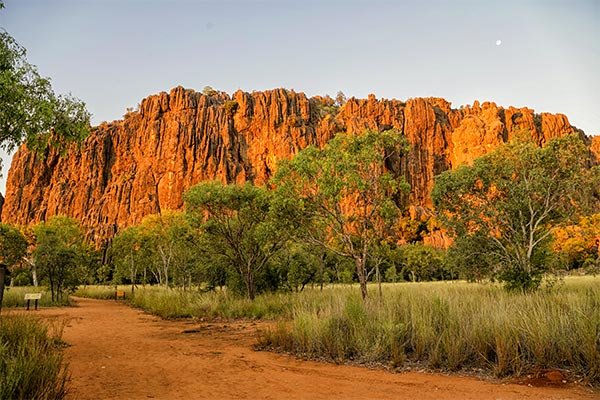
Zebedee Springs, one of the Kimberley’s most photographed soak spots, can thank a permanent underground supply of water which feeds to the surface via a fault line for keeping its waters at a constant temperature of 28–32°C, every day.
Accessible from El Questro Station or as a day trip from Kununurra, the springs are open from 7am until 12noon only.
A 1.5km return walk through palm forest leads to a series of natural rock pools and cascades, sitting at around 30°C.
No ladders. No railings. No shortcuts.
Just rock hopping, warm water and shade.
Arrive early — it fills fast in peak dry season (approximately May to October).
Peron Heritage Precinct, Francois Peron National Park
Hidden within the Peron Homestead Precinct, this small artesian hot tub surprises many first-time visitors to Shark Bay and the beautiful Francois Peron National Park.
The artesian water is hot — very hot — sitting around 42°C.
After-hours soaks here, watching the sun drop over red dirt and saltbush, are hard to forget.
There is no drinking water available, so bring your own and make use of the barbecue facilities and grass area for your post-soak cooldown.
WA National Park entry fees apply.
Northern Territory
Elsey National Park
The Stuart Highway runs straight through Mataranka, and just beyond town lie some of the NT’s most relaxing thermal waters.
Only a short drive from Mataranka and slightly longer trek from Katherine, Elsey National Park is renowned for its two natural thermal pools (it also offers great boating and fishing if you’re that way inclined).
Bitter Springs is warm year-round. Pool noodles are highly recommended so you can float downstream under the palms. If you don’t have your own noodles, guests staying at Bitter Springs Cabins and Camping can hire or buy them.

Bitter Springs (Credit: Robert Crack)
Mataranka Thermal Pool is in a more ‘formal’ setting than Bitter Springs and has concrete edges for easy access to the water. Getting to the pool is via Mataranka Homestead (complete with replica homestead made for the We of the Never Never movie). This pool is the smaller of the two, so it can feel a bit busier than Bitter Springs.

Mataranka Thermal Pool (Credit: Robert Crack)
An NT Parks Pass is required.
One night here is never enough. Check out accommodation options at Bitter Springs Cabins and Camping, Territory Manor or Mataranka Homestead.
Katherine Hot Springs
Often overshadowed by Nitmiluk Gorge, Katherine Hot Springs sit quietly on the banks of the Katherine River, just minutes from the town centre on the banks of the Katherine River. Yet with so much else going in and around Katherine, the springs are often missed by travellers.
A series of six clear, interconnected pools are linked by paths and boardwalks, with safe access via steps, handrails and a wheelchair ramp. The water averages a refreshing 25°C, making it ideal for a relaxed dip rather than a hot soak.
Facilities include nearby parking, toilets and picnic areas, with a cafe operating in the dry season (approx. April–October).
Entry is free and opening hours are 7am–7pm (closed during wet season when the river levels rise).
Early mornings are best.
Locals advise keeping valuables close and avoiding late afternoons.
Katherine boasts a raft of caravan and camping options — check them out here.
Why travellers keep coming back
Artesian and geothermal springs bathing isn’t just about warm water.
It’s about:
- Slowing the pace
- Easing sore joints
- Sharing stories with strangers
- Letting the road wash off
No man-made heaters. No worries. And no rush.
Just water that’s been underground longer than most tracks have existed.
Planning your next soak?
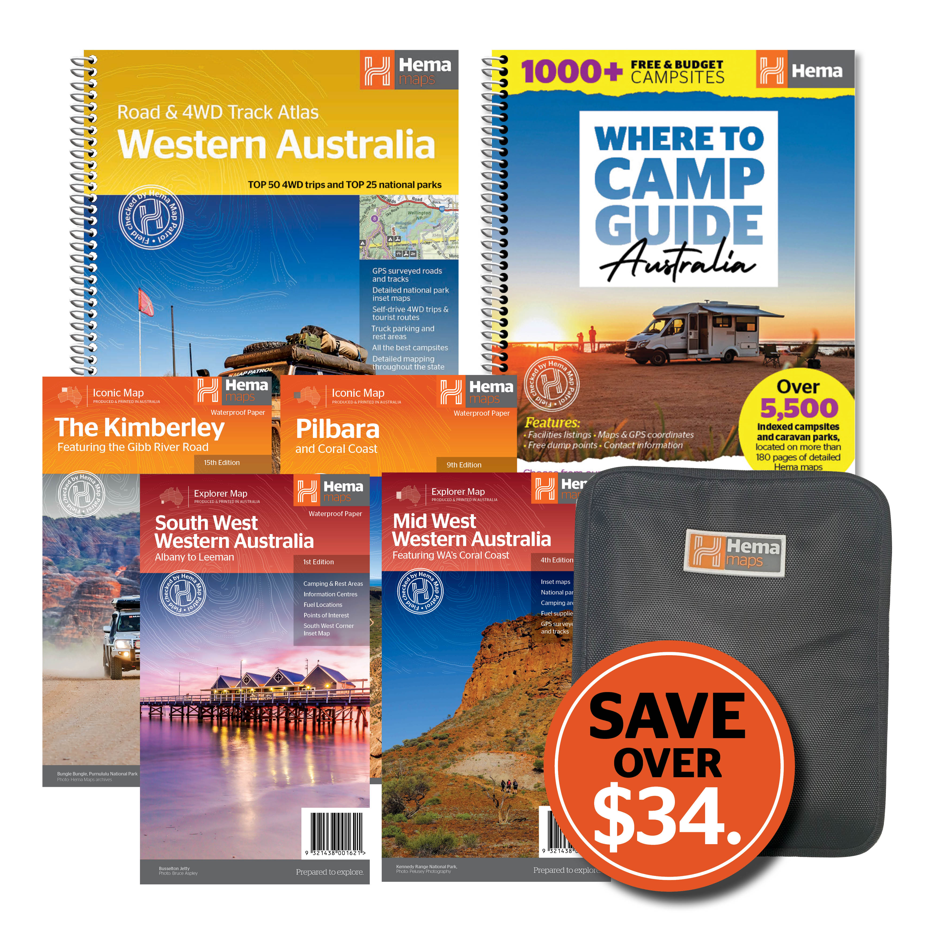
Many of these locations are marked in Hema Maps’ touring maps and guides, making it easy to link them into your next loop or long-haul run.
Artesian bore baths, hot springs and thermal pools are more than just places to swim. They are social hubs, rest stops and rewards at the end of long outback miles — warm water rising quietly from deep beneath the road.
Because sometimes, the best campsite is the one with steam rising at sunset.
Maps so you don’t get lost
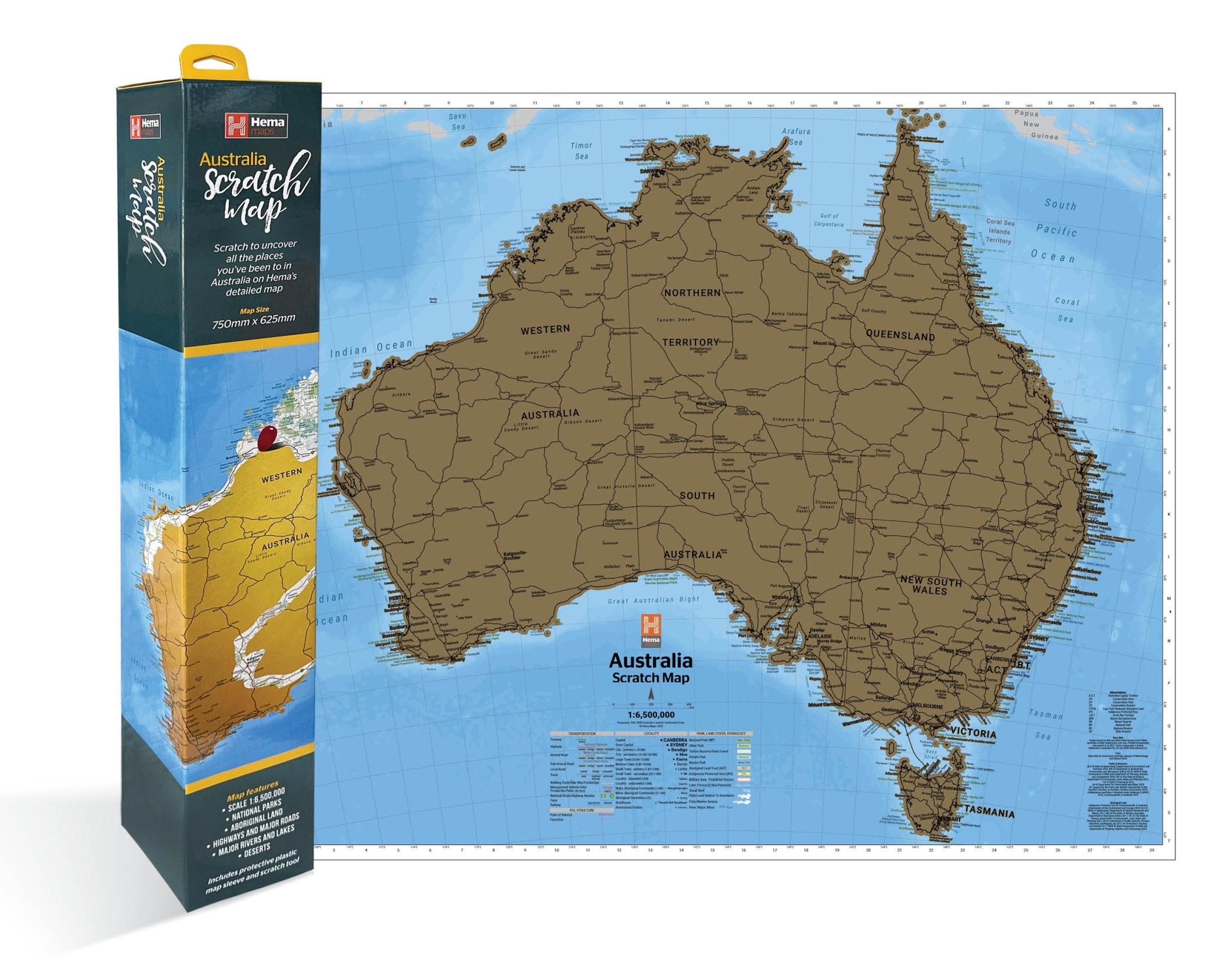
Australia Road & Terrain Map — $15.95
Australia Road & 4WD Easy Read Atlas - 292 x 397mm — $49.95
4WD Adventures — $69.95
Related articles
Outback anthems return: Big Red & Mundi Mundi Bash 2026