
Alpine Driving
Written by Hema Maps Editorial team, pictures Stella Mammides, Alpha #64

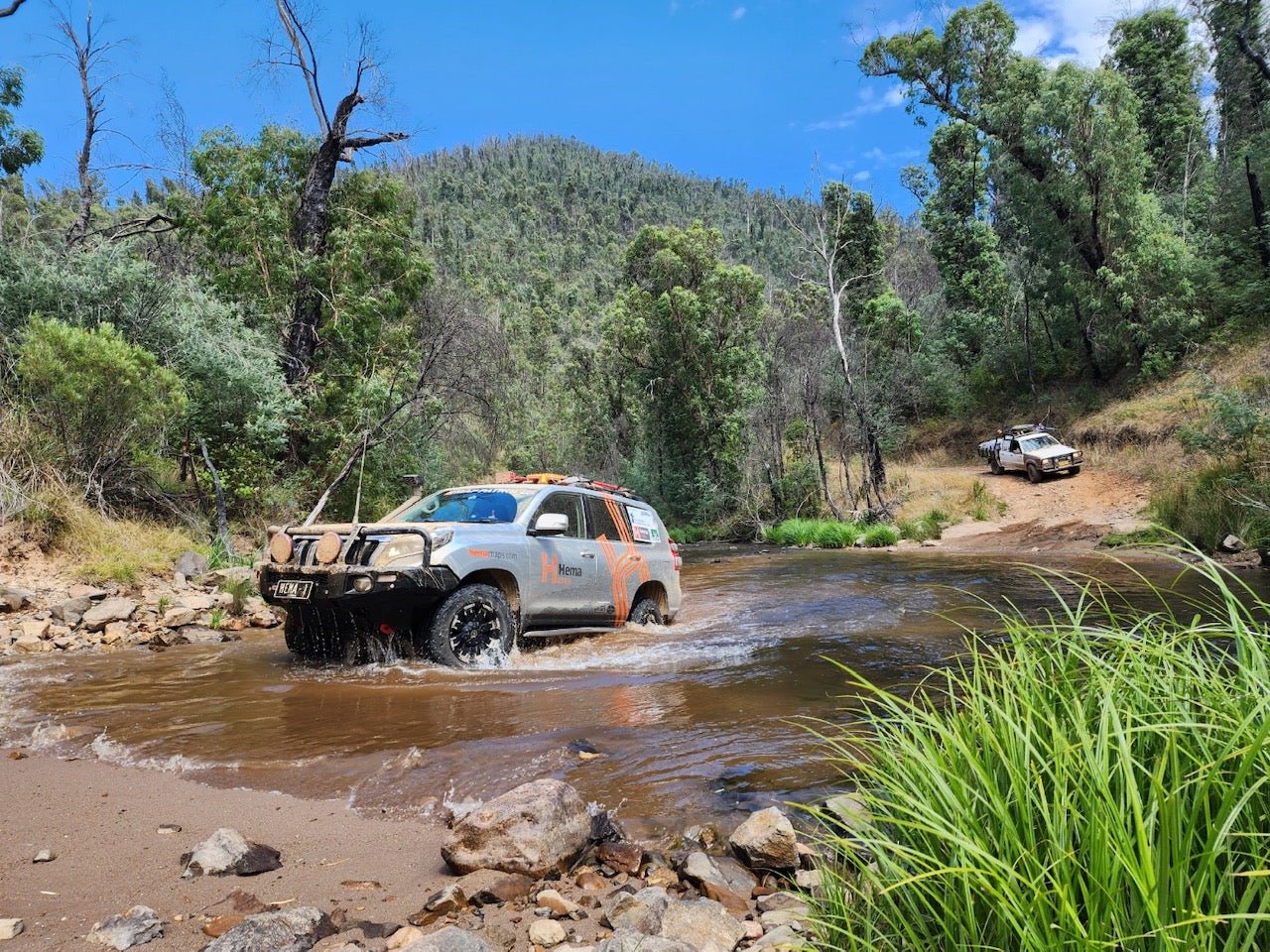
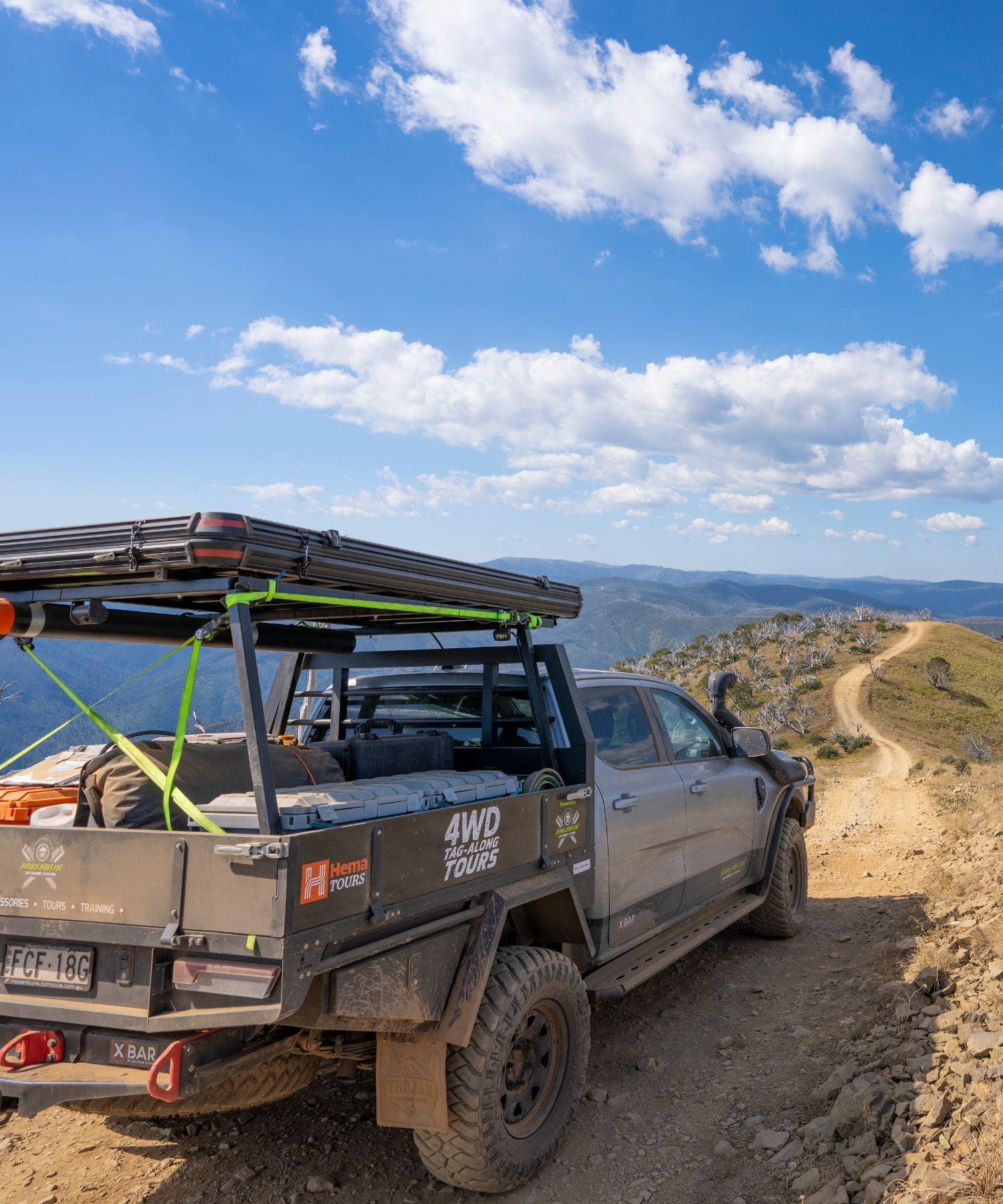
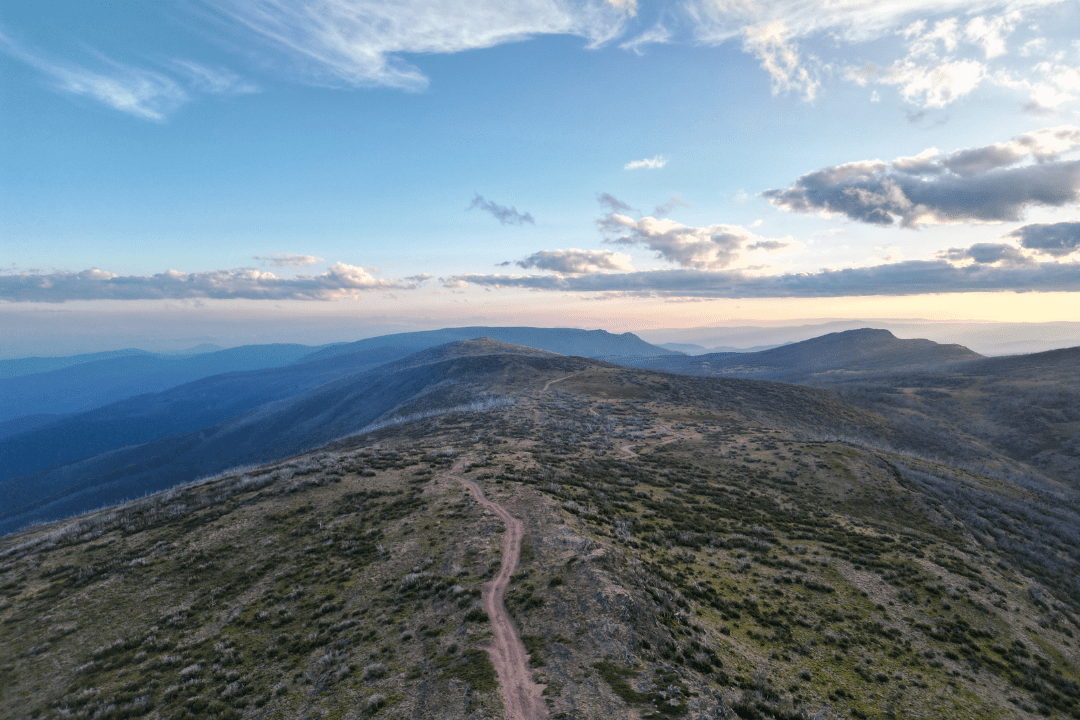
Driving in alpine areas is a unique experience that can present some unique problems. Along with the good times, there can be dark times... and the dark times can be very, very dark. By its very nature, the weather in alpine areas is unpredictable, so it pays to be prepared. Snow, blizzards and thunderstorms can occur at any time of the year, and they can come on quickly and without any warning. That said, you should carry suitable clothing and equipment for all conditions at all times.
Most of the High Country is designated as a “remote area”, the same classification given to the central deserts of Australia. Travellers need to be well versed on the special preparation and precautions needed for safe travel through the High Country. Relatively short distances can take you very long periods of time. If there is a mechanical problem or the vehicle becomes bogged, you may have to rely on your own resources as many of these roads are not highly travelled.
Because of these unique conditions, it is impossible for us to guarantee the safety of any particular road or track. The year-round weather dangers can turn any 4WD excursion into a life-threatening experience.
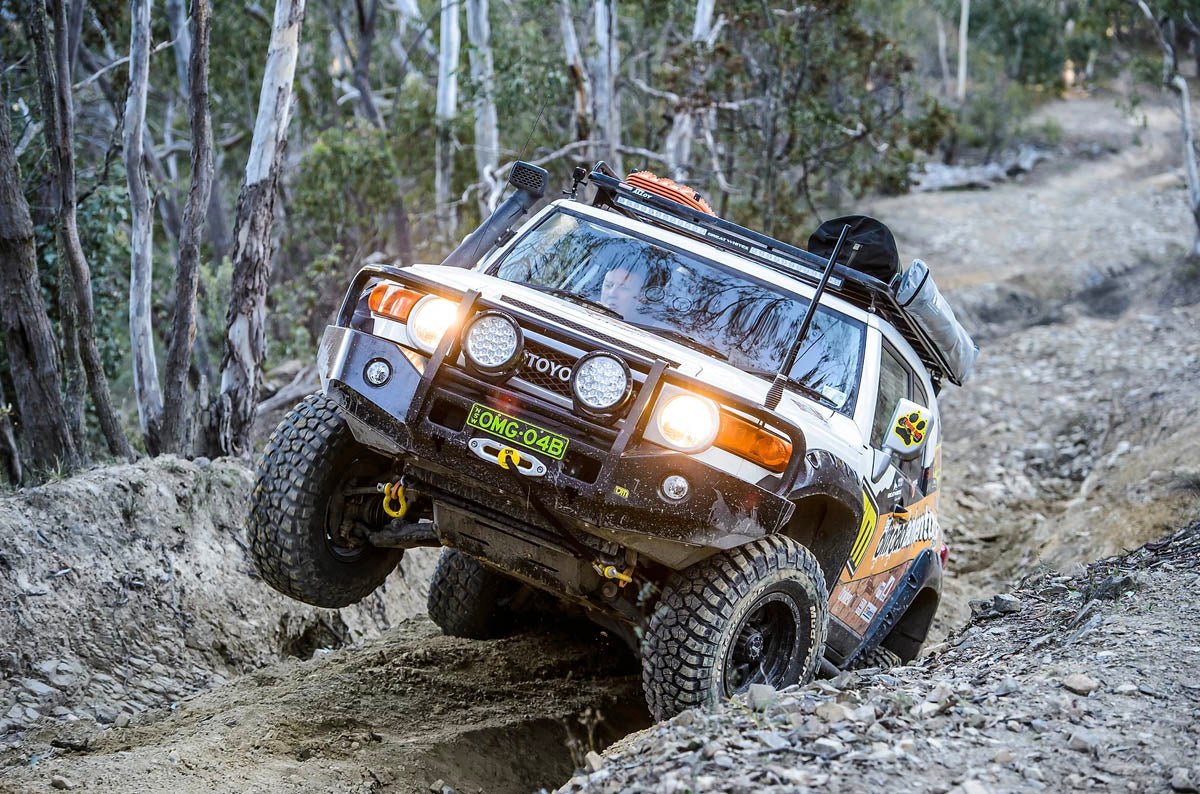
Any tracks in this guide that are not subject to seasonal road closures and not gated should be safe for less capable Sports Utility Vehicles (SUVs or “Soft Roaders”), driven with care. If a track is designated as subject to seasonal road closure, you can safely assume you are going to need a very capable 4WD vehicle equipped with recovery gear. You can also assume that you need to be experienced in four-wheel driving and know how to use the recovery gear if you venture out on one of these tracks – your life may depend on it.
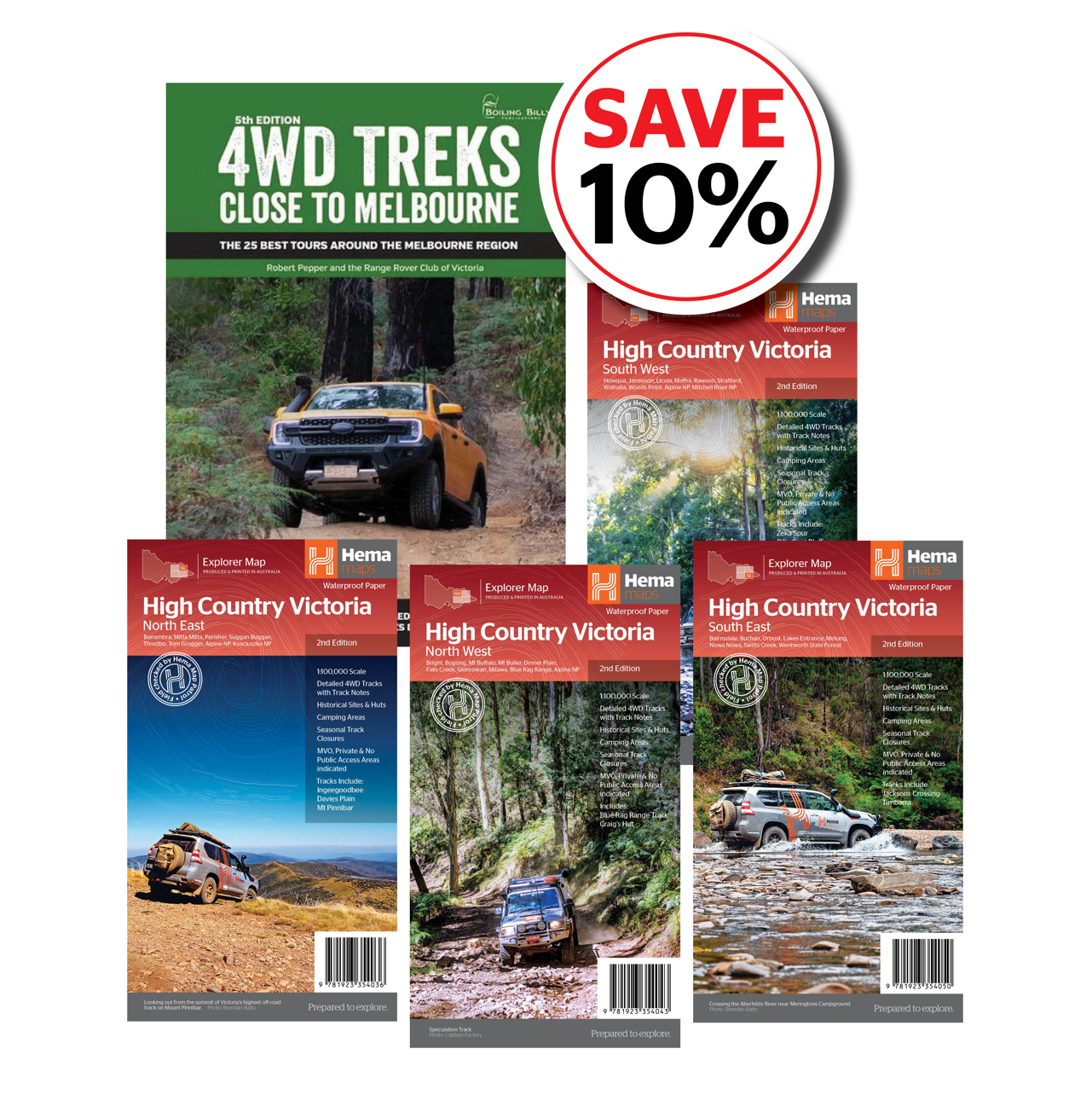
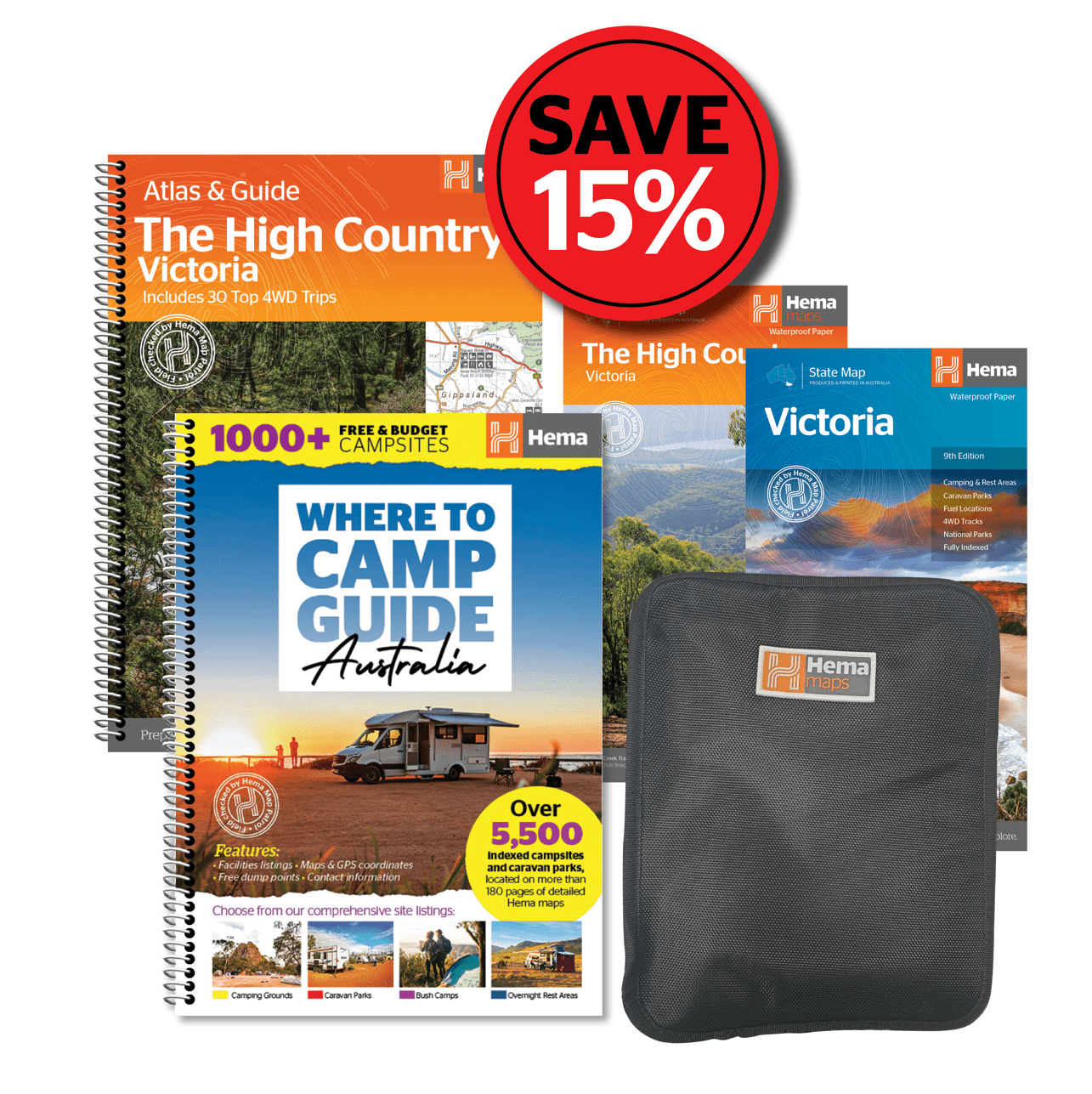
Find these alpine driving tips and much more in the Hema Maps Vic High Country Atlas and Guide. It’s a handy companion for planning your next High Country adventure, helping you explore the region with trusted Hema mapping and practical travel information. Take it along as you plan your route and prepare for the conditions ahead.

Before Leaving Home

Make sure that you are fully equipped for all possible conditions. For winter driving in snow you shouldn’t skimp out on tyres or tyre chains. While 4WD vehicles are generally better in snow than 2WD vehicles, chains are still an essential safety feature and must be carried during winter. They should be the right size for your vehicle’s tyres.
Diamond-pattern chains are now the only legally allowed chains; other styles of tyre chain, ie “ladder chains” are not allowed on the Great Alpine Road or in the Alpine Resort areas.
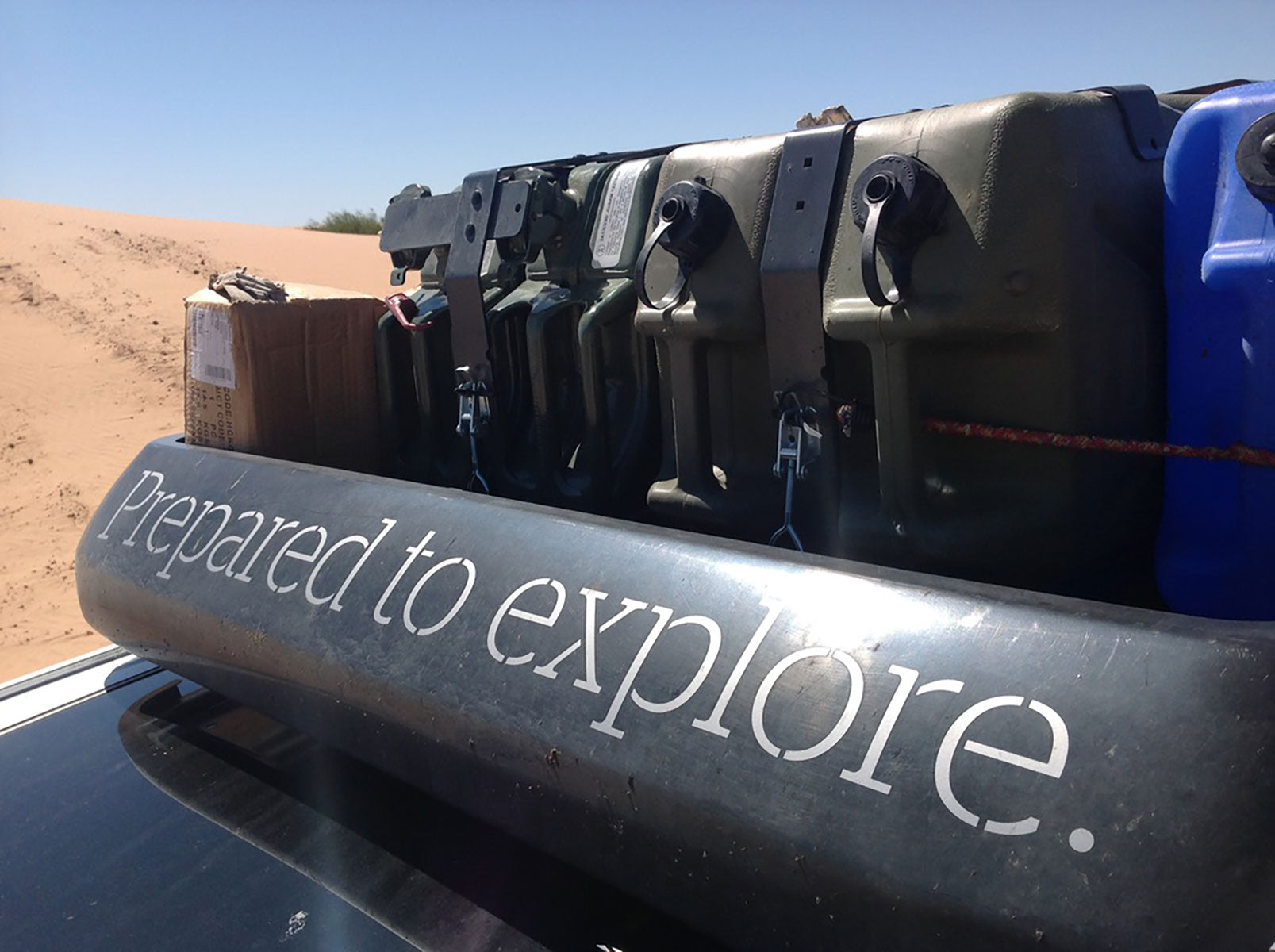
If you intend to get off sealed roads, make sure to carry all the necessary recovery gear and know how to use it.
This checklist should help you make sure you’re prepared:
- Make sure you’re carrying a ground sheet (for putting on chains), a spade, rubber gloves, a towrope, a plastic ice scraper and a torch in addition to recovery gear.
- Bring warm clothing that will provide you with proper insulation, such as thermals; avoid jeans and other materials that take a long time to dry.
- Check your battery: it should be in good condition.
- Check the condition of your tyres (including your spare tyre) and ensure their pressure and wheel balance is correct. Tread depth is very important as tyre performance, especially braking and steering in wet or slippery conditions, deteriorates dramatically below 2mm of tread.
- Check that your roof rack is stuck on tight. A good dump of snow will add considerable weight to the rack – is it strong enough to withstand it?
- Put anti-freeze compound in your radiator and take along spare hoses.
- Make sure that all your vehicle’s lights are working.
- Ensure that your fuel tank is topped up as you may experience lengthy delays in bad weather when you really need to keep your motor running. If you drive a diesel-powered vehicle, fill your fuel tank with alpine mix diesel from a service station close to the snowfields to avoid the freezing (waxing) of fuel. Dual fuel vehicles (LPG/petrol) should switch to petrol before entering alpine areas.
- Try fitting your chains on your tyres before your snow trip to ensure that they fit properly and that you’ll know what to do when the time comes to really use them.
- Bring a spare key as a key lost in snow can be impossible to find. (Some people use wire to hang it from a secret place under the car.)

Daily Maintenance
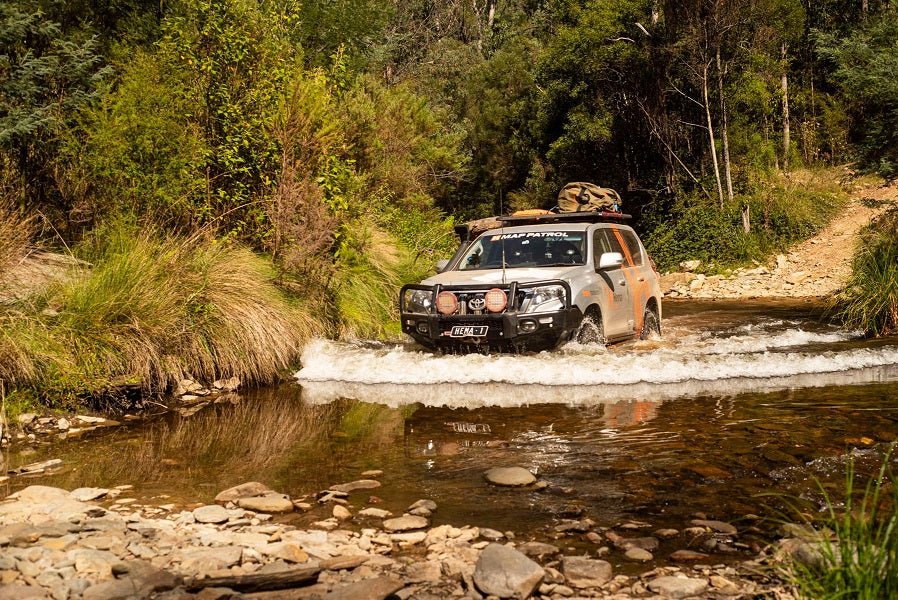
It’s important to check over your vehicle when using it in the High Country, especially on backcountry 4WD tracks. Make sure to check engine oil, coolant levels and screen washer levels every day before setting out. Ensure you have added anti-freeze where necessary and check tyre pressures.
If your vehicle has a diesel engine, make sure you top up with “winter diesel” fuel for the cold conditions – available at towns like Bright or Omeo. This is very important: diesel becomes waxy in cold temperatures, causing your engine to stop running. When asking for “Winter Diesel”, you may be greeted by blank stares from service station console operators on major highways. However, the operators in the alpine regions do stock it and should be able to help you if you have any questions. These operators are also best suited to perform an electrolyte test on your engine’s coolant and add anti-freeze for you as well.
Daily maintenance is important when driving in the High Country.
Track conditions change regularly so always check with authorities before heading out.
Planning a High Country trip?
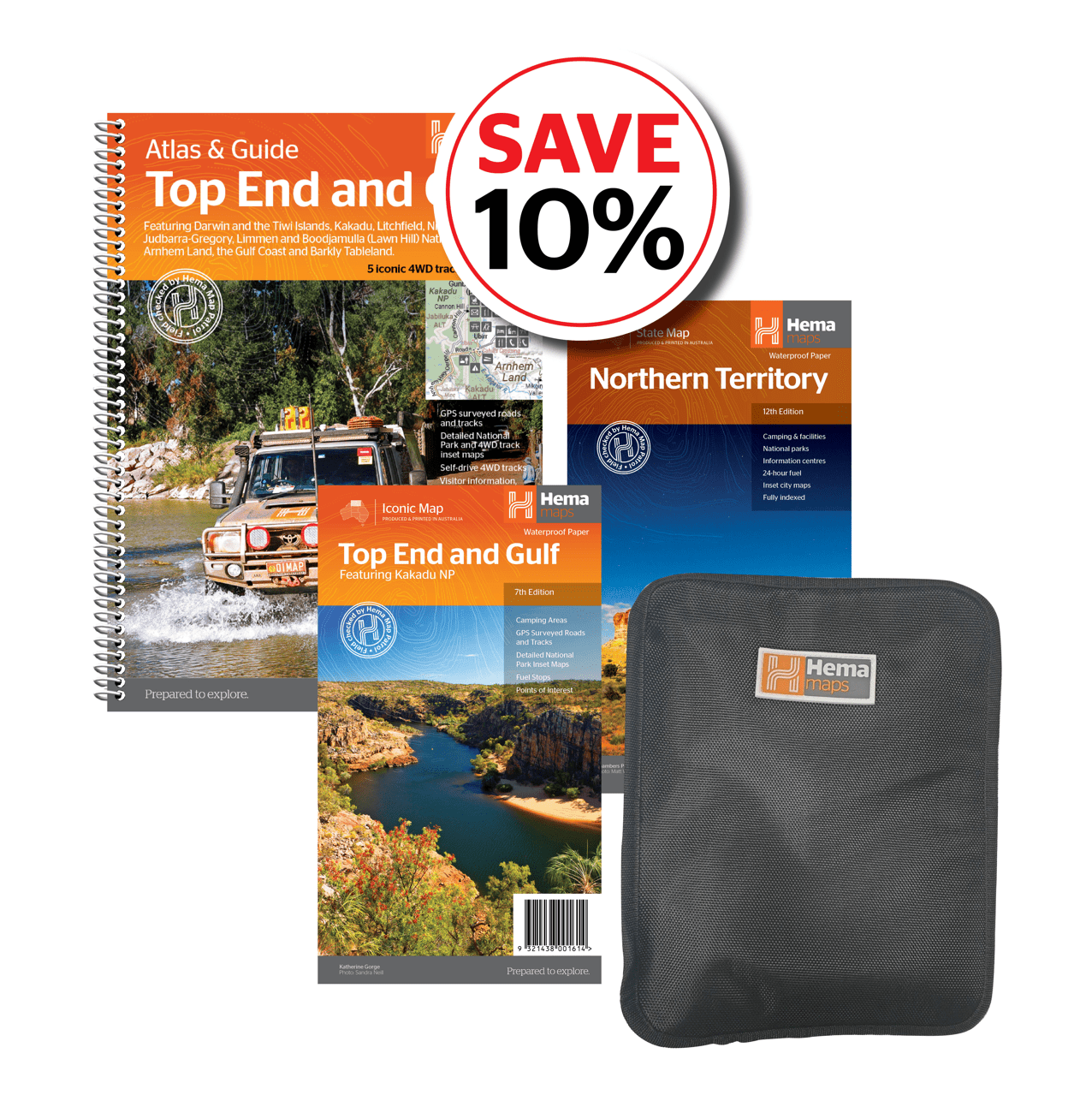
Our bundles like the Victorian High Country Adventure Pack can help you plan your route and keep trusted mapping close at hand. Take it along with the right recovery gear, check current track conditions before setting out, and make sure your vehicle and experience suit the route ahead.