



4WD Glovebox Guide
Review by Lorenzo Moschetta

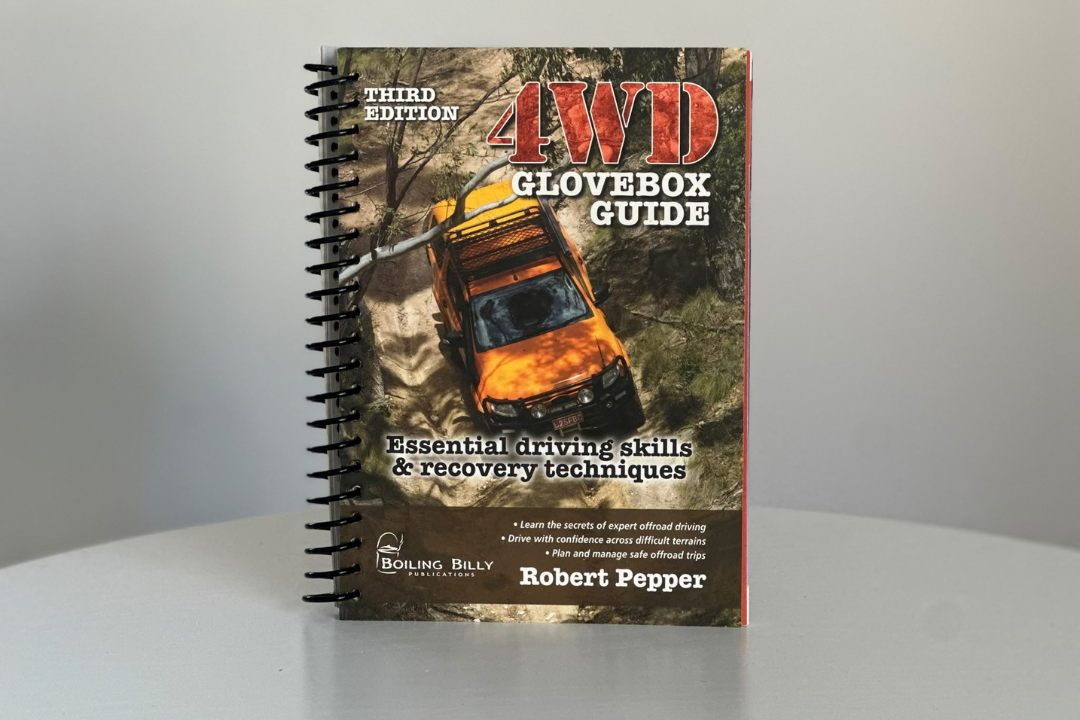
My first impression was how small and lightweight it is. It fits comfortably in the glovebox without taking up valuable space, while the spiral binding allows the pages to sit flat or fold completely behind one another. That makes it easy to move between sections and, importantly, use the guide with one hand when you are beside the vehicle or checking something at camp.
The cover is soft and flexible, rather than hard or bulky, but the pages feel like good-quality paper. It strikes a sensible balance between portability and durability, although I would still keep it protected from water, mud and everything else that inevitably finds its way into a touring vehicle.
Starting with the basics
One of the guide’s greatest strengths is that it genuinely starts with the basics - and I mean the basics.
It explains the different types of four-wheel drives, how common 4WD systems work and what various vehicles are designed to do. The section covering approach, departure and ramp-over angles is particularly well explained. These terms can sound unnecessarily technical to newcomers, but the guide uses clear language and illustrations to make them much easier to understand.
From there, it covers essential areas including suspension, wheels and tyres, vehicle preparation, recovery equipment and driving techniques for mud, sand, water, rocks and steep hills. Simple checklists are also included to help drivers prepare their vehicles and look after the safety of everyone travelling with them.
More than a beginner’s introduction

Although it starts gently, the guide does not remain at beginner level. It progresses into more serious situations, including winching, recovery loads, vehicle rollovers and travelling in a convoy.
The third edition has also been updated with information on modern recovery equipment and techniques, including snatch rings, along with revised sections covering winching and snatch-strap recoveries.
That progression is what makes the book useful to such a broad audience. New 4WD owners can read it from the beginning and build a solid foundation, while experienced drivers can keep it nearby as a quick refresher. Even if you already know most of the material, having the essential information collected in one convenient place can be valuable when preparing for a trip or dealing with an unfamiliar situation.
It is worth remembering that this is a field reference rather than a replacement for practical driver training. The guide can help you understand the principles, but learning recovery techniques under the supervision of a qualified instructor remains the best way to develop real-world skills safely. The publisher makes the same distinction, explaining that the book complements practical training but does not provide a formal competency on its own.

The unexpected highlight
My favourite part is the quiz at the end. I did not even know the book included one until I reached it!
It is a clever addition because it encourages you to test what you have actually learned instead of simply reading the information and forgetting it. It also highlights any areas you may want to revisit before your next trip. It is not a formal qualification, but it is an enjoyable and useful check of your understanding.
Final verdict
The 4WD Glovebox Guide is a genuinely handy reference for both new and experienced four-wheel drivers. It is compact enough to leave in the vehicle, straightforward enough for beginners and comprehensive enough to remain useful as your knowledge grows.
The spiral binding, accessible explanations and practical subject matter make it particularly well suited to real-world use. Whether you are learning what your first 4WD can do, preparing for a convoy trip or refreshing your recovery knowledge, this is one of those books that deserves a permanent place in the glovebox.