

Words John Ford Pics John Ford and supplied
We got behind the wheel of the 2026 Ford Ranger Super Duty on a three-day test — tough, capable and ready for serious offroad and Aussie touring.

(Credit: Ford Australia)
Most of the hype around the 2026 Ford Ranger Super Duty has highlighted the significant increases in towing and load capacity, but there’s also more in store for those wanting to kit out a terrific touring option.
In brief
4500kg GVM
4500kg braked towing capacity
8000kg GCM
Single, crew and double cab chassis
3.0L V6 Turbo-Diesel with 600Nm
In development in Australia for seven years, the Ford Ranger Super Duty finally launched to an eager press gathering in November, only a week before models start lining up at dealers across the country.
Plenty has been teased over the last year, and test mules have appeared as part of the extensive Australia-wide assessment program. Ford invited Hema Maps along to the on-road and on-track reveal at Tallarook, north of Melbourne, and into the Victorian High Country. It was a non-stop three-day event that saw Ford executives front and centre for a Q&A session and all the Super Duty variants face real-world challenges.
The decision to develop the Super Duty platform was made at the highest level of Ford Australia. Seven years ago, the current CEO, Andrew Birkic, was in charge of Ranger development worldwide. When speaking with key commercial users of the Ranger, he discovered the frustrations some businesses faced because they had to modify their vehicles to suit their specific needs. For instance, forestry companies were removing seatbelts from water trucks because an extra passenger would push the vehicle over its GVM when loaded. There were also problems with only being able to carry 500L of water to a fire. Birkic proposed an upgraded Ranger to Ford engineers, who showed great enthusiasm for creating a more capable model. Ford Australia employs around 1500 engineers, designers and automotive specialists — all of whom were eager to get involved.
 (Credit: John Ford)
The Super Duty’s familiar heritage
On seeing the Super Duty for the first time, it feels familiar — like spotting your mate’s little brother after he’s transformed into a gym junkie and bulked up in all the right places. As you inspect this new and improved Ranger, you notice the wider track, higher stance, bigger wheels with eight oversized nuts and the new bonnet with the Super Duty name stamped into the metal. There are three 4x4 versions — single, super and dual cab — and with heavy-duty steel trays fitted, they look ready for work.

(Credit: John Ford)
While a tougher, more capable work vehicle was the main reason for the update, the Super Duty will appeal to many in the recreational sector as well. It offers a tough work profile of a 4500kg GVM and 4500kg braked towing capacity, although not both at once — the GCM is 8000kg. It has a beefed-up 4WD capability that suits touring, offroad adventures and caravanning perfectly. Here’s a vehicle you can use for fun that still functions as a shopping cart when at home.
Power, performance and towing
Under the new sculptured bonnet is the 3.0L V6 Turbo-Diesel engine seen in the Super Duty’s less fortunate twin. Surprisingly, the skinnier twin has 30 more kilowatts of power, coming in at at 184kW compared to 154kW in the not-so-Super Duty. How come? Well, Ford has programmed the engine for durability and reliability, as well as to meet the new emissions standards for its heavy-load applications. The same 600Nm of torque remains, and the 10-speed automatic transmission has been recalibrated to maximise towing and load carrying. As part of the rejig, there’s a new radiator and improved cooling.
Underneath, the upgrades are substantial. The chassis features thicker rails, stronger crossmembers, larger engine mounts and longer, more robust rear springs on heavy-duty mounts. We were told the chassis is 100kg heavier, and overall, the Super Duty’s twin-cab chassis exceeds the equivalent Ranger’s weight by more than 500kg.

(Credit: John Ford)
Strut towers are taller and reinforced, and the control arms are much larger than those on the standard Ranger. Heavy-duty bash plates protect the gearbox, transfer case and drive line. The 130L fuel tank’s bash plate is strong enough to use to jack up the ute. The diffs have also been upgraded, and the front one is from a Bronco Raptor, so Ford is anticipating hardcore action ahead for its much-anticipated model.

(Credit: Ford Australia)
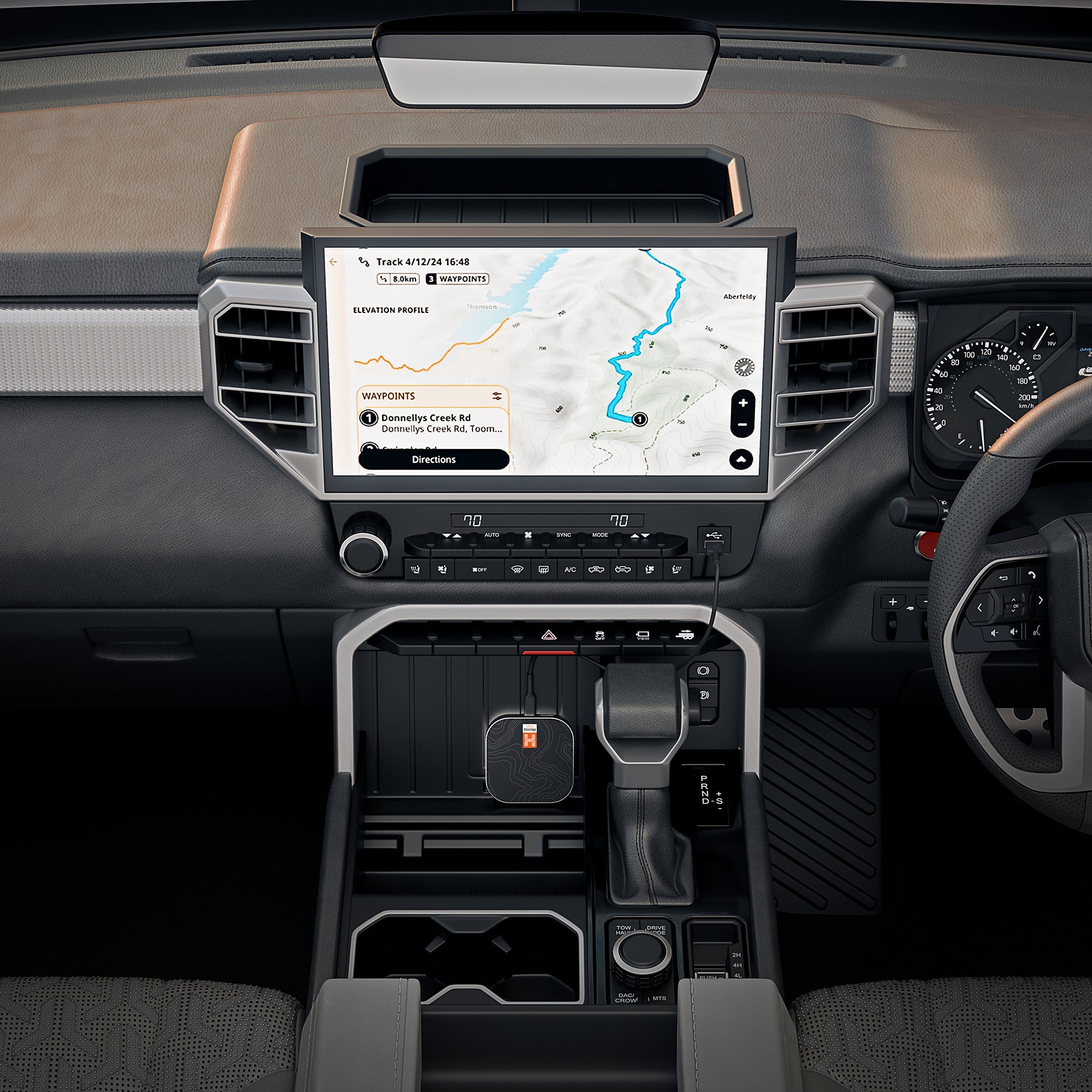
Ford staff put in thousands of kilometres of real-world testing with vehicles at their capacity limits. Engineers told me they repeatedly drove the Super Duty up and down Brown Mountain on the NSW South Coast with a trailer and load maxed at 8000kg GCM and took one to the top of the Blue Rag Range Track in the Vic High Country with a 4500kg GVM.The electrical diff locks can be chosen individually or in tandem, and the controls via the 12in central screen were easy to find and fast to set. That’s right — you can have just the front locker for tricky uphill sections.
Drive modes to get you through
The 10-speed gearbox operates in permanent 4WD, is programmed for a variety of applications and it’s also happy in either auto or select mode, depending on how you drive. Seven selectable drive modes (Normal, Eco, Tow/Haul, Slippery, Mud/Ruts, Sand and Rock Crawl) cover most applications, providing optimal throttle response, gear shifting, traction control and stability control. Or turn them off and do your own thing with your choice of high or low range.
We had ample opportunity to experience the offroad capability over our three days at the launch, and I’ll get to that soon because there’s more tech worth highlighting.
Know your touring and towing limits
The Super Duty has a payload capacity ranging from 1825kg to 1982kg depending on the style, but this will drop to somewhere between 1750kg and 1850kg by the time you add a tray. Because of this, it’s essential to know when you’ve reached your limit, and that’s where the on-board scales become a real benefit. A system of rods and sensors in the suspension feeds data to the central touchscreen, showing the payload in real time as you load up.
Anyone towing will be impressed by the other innovative technology packed into the new Ranger Super Duty. The Smart Hitch helps balance the load and ensure you stay within the towball limit. This hitch measures the van or trailer’s downforce as it’s lowered, allowing you to load or rebalance for optimal weight distribution. This is an important safety feature because too much or too little tongue weight can cause dangerous trailer sway or overstress components.
Wading and water crossing capability
As part of the offroad preparedness, the Super Duty achieves a class-leading wading depth of 850mm. To this end, important engine and electrical components are waterproofed or mounted out of harm’s way, and high-mount breathers connect to the diffs, gearbox and transfer case to protect them from water ingress. Owners should note that the maximum wading depth is measured at 7km/h, so charging into a deep creek at speed isn’t encouraged and would potentially result in expensive electrical and mechanical damage.
 (Credit: John Ford)
Advanced safety tech for towing, touring and work
We have become used to new vehicles being encumbered with smart technology designed to save us from ourselves. Happily, while the Super Duty has plenty going on, I didn’t feel like it impinged on my driving enjoyment. For example, there’s Adaptive Cruise Control with stop-and-go functionality, traffic sign recognition and lane centring, but it’s not annoying, and at no stage did I feel it was taking over.
Helpful aids include a 360-degree and rear camera, parking sensors and cross traffic alerts. Blind-spot monitors were especially relevant when towing.
One feature that will be useful to anyone new to towing is the Pro Trailer Back-up Assist, which uses the main screen and the central console dial instead of the steering wheel — a bit like driving a remote-control car.
Ford received feedback from the firefighting and agricultural sectors which suggested that automatic diesel particulate filter regeneration in fire-prone situations could pose a potential danger. So, to remedy this, the new model has DPF regeneration control, which delays the burn cycle.
The Super Duty’s Offroad Screen shortcut button will be a favourite feature on the trails. Located on the centre console, it switches the main screen to give all the relevant 4WD modes and displays. It shows driveline status, pitch and roll, the buttons for diff locks and trail control and steering angle, which will be great in mud and sand.
Hitting the Super Duty testing track
Our introduction to driving the vehicles began with a purpose-built 4WD circuit at Eagle Ridge Event Park in Tallarook that, except for long, deep sand crossings, included most of the situations an average Aussie might face in a lifetime.

(Credit: John Ford)
Because the dash included lateral and side inclinometers, it was easy to see how steep the angles the track builder had set for us were. First up was a short water crossing where the depth exceeded the bonnet in places. Next was a drop-off at 33 degrees, followed by a sideways slope at 29 degrees, which was a little unnerving.
Sets of deep holes had the Super Duty’s corners lifted 500mm from the ground, and the tyres scrambling for traction. Very impressive to me were the sharp corners in a berm, where the only way to get around was to use Trail Turn Assist, which in 4WD locked the inside wheel and allowed the ute to turn sharply with traction from its opposite wheel. That’s cool.
We drove up and down steep, rocky hills with low range and diff locks engaged on the way up and Hill Descent Control used on the way down. Traction was impressive, the engine proved torquey and tractable, and nothing caused a problem. The exercise showed that the Super Duty has serious offroad ability — just as Ford promised.
On the road: Comfort and handling
Our trip to the Vic High Country included typical country roads and a twisty section of bitumen around Jamieson that’s used in the Targa High Country Tarmac Rally. Given the Super Duty’s high 4500kg GVM, I expected a rough ride over potholes and bumps, but I was pleasantly surprised by how smooth and comfortable it was. Ford’s progressive-rate springs and dampers perform exceptionally well across the range. Handling was also safe and predictable, even during spirited driving through the tricky corners of the Jamieson section, where a combination of all-terrain tyres and a high stance might have suggested trouble.
Offroad adventure on Mount Terrible
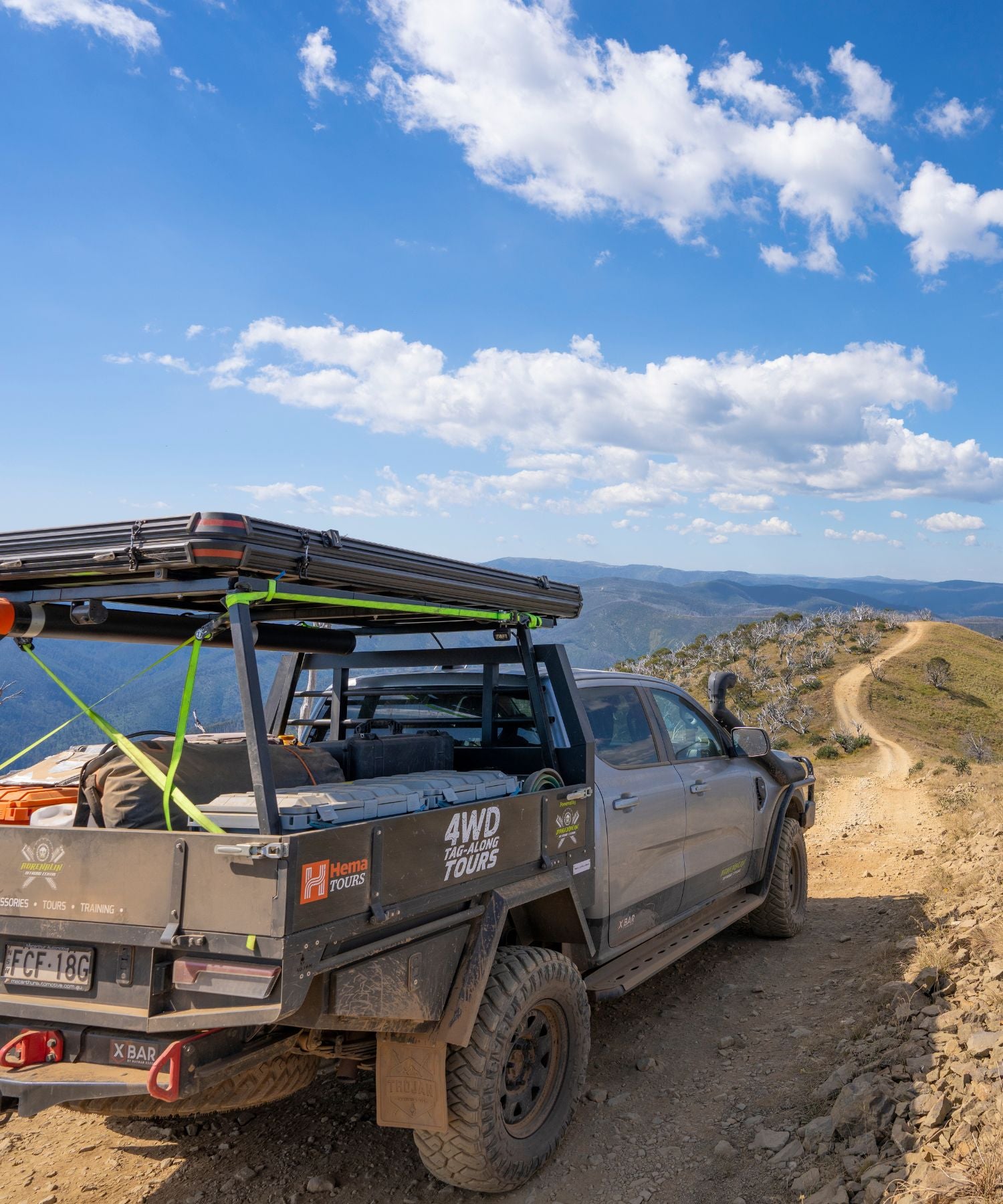
Although it might be one of the most accessible peaks in the Vic High Country, the alpine tracks around the top of Mount Terrible at 1325m still pose challenges on some sections, especially on the Snake Edwards Divide Track on the way down. Some hills needed the diff locks, and we chose to use them in other spots to avoid track damage from spinning wheels.

(Credit: Ford Australia)
Steep downhill drops gave me the chance to try the Rock Crawl drive mode, which is excellent. You set a speed and the tech takes over the brakes and traction, so all you have to do is steer. A front camera offered a low view of the road ahead to convince me we weren’t heading into an abyss. Near the bottom, we crossed the fast-flowing Goulburn River for some more water crossing experience, and the Super Duty lapped it up.
Final thoughts on the 2026 Ford Ranger Super Duty
You don’t have to be Nostradamus to predict correctly that the Ford Ranger Super Duty is about to seriously shake things up in the local market. The commercial sector is already lodging orders, and the first batch in Ford dealers is spoken for.
The warranty is for five years with unlimited kilometres, and with a re-engineered engine and re-rated power, reliability should not be an issue. Prices start at $82,990 for the Single Cab Chassis and $89,990 for the Double Cab (Manufacturer List Price, so factor in dealer, rego and other on-road costs). A genuine heavy-duty steel tray costs around $6000. A 4.5T tow rig with true offroad cred for less than $100k? That’s exceptional.
Any recreational drivers thinking of fitting out a touring rig or anyone towing a decent-size van would have to believe the Super Duty is a dream come true, because there isn’t a current 3500kg-rated dual-cab ute that comes anywhere near this capability.
Measuring up
Pros:
Great towing ability
Modern tech for offroad travel
Looks tough and has a sharply designed interior
Cons
AdBlue is a necessity, which some won’t like
2026 FORD RANGER SUPER DUTY RATINGS
VALUE FOR MONEY 9/10
A 4.5T tow rig for less than $100k is exceptional
TOWING PERFORMANCE 8/10
Best mid-size ute. It’s not a RAM, though
HITCHING UP 10/10
The on-board scales and the Smart Hitch are fantastic
CREATURE COMFORTS 7.5/10
Comfy cloth seats, lots of device mounting options plus big, clear 12in screen for controls and navigation
ACCESSIBILITY OF SPARE PARTS 8/10
There are Ford dealers all over the country
FUEL ECONOMY 7/10
Ford claims 1000km from the 130L long-range fuel tank
SOLO PERFORMANCE 7.5/10
Handles and rides well, given the heavy-duty specs
ENGINE POWER 7.5/10
There’s a drop in power compared to the standard Ranger, but the gutsy 600Nm of torque remains
INNOVATION 8.5/10
The Super Duty changes the game
X-FACTOR 8/10
Looks cool, and everyone I know will want one
2026 FORD RANGER SUPER DUTY SPECS (4x4 Double Cab Chassis)
WEIGHTS AND MEASURES
Length (excl. tongue) |
5470mm (17ft 9in) |
Width (excl. mirrors) |
2032mm (6ft 6in) |
Height (to top of antenna base) |
1985mm (6ft 5in) |
Wheelbase |
3270mm (10ft 7in) |
Ground clearance (at kerb weight) |
295mm (11.6in) |
Wading depth |
850mm (2ft 8in) |
Approach / Departure angle (at kerb weight/unladen) |
Approach: 36.1 degrees |
Kerb weight |
2675kg |
Payload |
1825kg |
Gross combined mass (GCM) |
8000kg |
Gross vehicle mass (GVM) |
4500kg |
Braked towing capacity |
4500kg |
Towball (max) |
450kg |
Axles |
Front: 1900kg |
DRIVETRAIN
Engine |
3.0L V6 Turbo-Diesel |
Transmission |
10-speed automatic |
Power |
154kW @ 3250rpm |
Torque |
600Nm @ 1750rpm |
GENERAL
Fuel capacity |
130L |
Suspension |
Front: Coils |
Brakes |
Front: 12in discs |
Wheels and tyres |
18in steel 8-stud wheels with General Grabber A/T LT 275/70 R18 tyres |
Warranty |
Five years / unlimited kilometres |
2026 Ford Ranger Super Duty Double Cab Chassis price from $89,990, plus heavy-duty steel tray (from $6000)
MORE INFORMATION
Ford Australia
P: 13 3673